
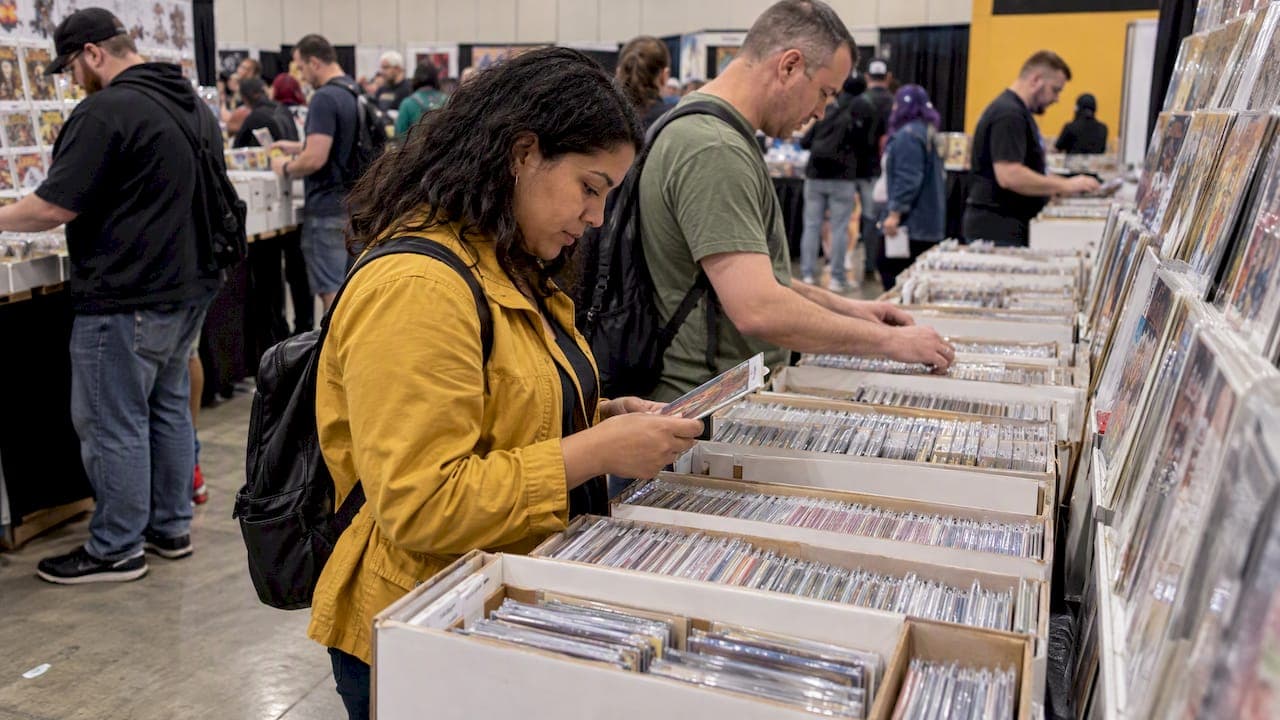
The fastest way to find a comic book show near you is to search by city and fandom, then confirm the date, venue, hours and ticket rules on the organizer's own page before you drive anywhere. Shows range from free one-room pop-ups to multi-day conventions with hundreds of vendor tables, so the "right" one depends on whether you want back issues, celebrity guests, cosplay or a specific variant cover.
This guide shows where to look, what to expect at different sizes of show, which details to verify, and how to track down a particular cover once you're on the floor.
TL;DR
- Start local: city guides, shop bulletin boards and organizer websites beat a generic search for shows that are actually close to you.
- Always confirm date, venue, hours, ticket type and refund rules on the organizer's official page, because details change.
- Small shows are best for back issues and bargains. Large conventions add guests, panels, cosplay and Artist Alley.
- To find a variant, know its cover letter, incentive ratio and cover artist, and ask dealers before the show whether they're bringing it.
- Keep tickets and certificates for convention exclusives. They help with provenance later.
Table of Contents
- Where to find comic book shows near you
- Know which kind of show you're walking into
- What you'll find on the floor
- Check these details before you go
- How to find a comic book variant at a show
- Perspective
- Find your local scene on Fanboys
- Plan your show day
- FAQ
- Sources
Where to find comic book shows near you
There is no single national calendar that every organizer uses, so you'll get the best results by combining a few sources.
Organizer websites. Most regional promoters keep an "upcoming shows" page. A California organizer such as Ohana Comic Con lists its stops across multiple cities in one place, which is typical: one promoter, a circuit of towns, a schedule that's updated as new dates are added. If you like a show, bookmark the promoter's page and check back each season.
Local comic shops. Your neighborhood shop usually knows about every pop-up, swap meet and convention within an hour's drive. Flyers by the register and announcements on the shop's social pages are often the earliest notice you'll get. If you're in a big metro area, browse our city guides to find the stores themselves, such as comic stores in Los Angeles, Philadelphia, Dallas or Denver.
Venue and tourism pages. State tourism boards often write up the bigger shows. New York State's tourism site, for example, has covered the Saratoga Comic Con with details on vendor tables, tournaments and guests. These pages help you judge whether a show is worth a weekend trip.
Community listings. Fan-submitted event and store listings catch the small stuff that never reaches a big calendar: a library pop-up, a hobby-shop swap day, a monthly game-and-trade night. That's the idea behind Fanboys, where fans add stores and events themselves so listings reflect what's really happening in town.
Free pop-up shows. Some shows charge nothing at the door. Las Vegas, for instance, has had free-admission mini-cons alongside its paid events, and pop-ups in other cities follow the same pattern. These are ideal for a first visit because the risk is only your time.

Know which kind of show you're walking into
A comic book show is a loose label. Before you choose, decide what you actually want to do there.
Small dealer shows and pop-ups
These are typically a hall, hotel ballroom or arena floor filled with dealers selling bagged-and-boarded back issues, trade paperbacks, graded books and toys. The Scottsdale Comic Book Show, also called Old Man Con, holds its event at a resort in Scottsdale, Arizona, and it's a good example of a show built around comic dealers rather than a celebrity lineup. If your goal is digging through longboxes, this is the format to look for. Phoenix collectors can pair a show with a visit to comic stores in Phoenix.
Regional conventions
Mid-sized conventions add guests, panels and cosplay on top of the dealer floor. Motor City Comic Con in Novi, Michigan is held at the Vibe Credit Union Showplace, and the organizer's FAQ spells out how tickets and photo ops work. Madison's comic con, run by a regional promoter, lists general admission at $10 with free entry for kids 12 and under in its 2026 edition. Prices like that are a useful benchmark for a mid-sized local show.
Large conventions
Big shows are an all-weekend commitment. Steel City Con in Monroeville, Pennsylvania, advertises 750 vendor tables and celebrity guests. At that scale you need a plan: which aisles, which guests, and how many hours you can spend before your feet give out. If you're based nearby, our guide to comic stores in Pittsburgh is a good companion for the days around the show.
Holiday editions and smaller-town shows
Plenty of towns host seasonal events. Permian Basin Comic Con in Midland, Texas, runs a Holiday Edition at the Midland Horseshoe Arena. Smaller markets are often where you find friendly prices and dealers who actually want to haggle.
What you'll find on the floor
Expect more than comics. Typical programming includes guests such as actors, artists, wrestlers, cosplayers, authors and musicians, plus signed collectibles, photos, live Q&As, costume contests and after-parties, according to a Providence tourism guide to Rhode Island Comic Con, which also notes a tattoo pavilion at that show.
Here's how the pieces usually break down:
- Exhibit hall: Dealers selling old comics, action figures, T-shirts, posters, DVDs and Funko Pops, as one convention-survival guide describes it.
- Artist Alley: Independent creators selling handmade artwork, self-published books, manga, prints and handmade collectibles. Minneapolis's MAGE, for instance, lists both an exhibition hall and Artists Alley sellers among its offerings.
- Panels and workshops: Discussions of comics, film, television, cosplay and costuming, and hands-on sessions like miniature painting, as this fan guide to what to expect explains.
- Gaming: Video game and tabletop areas, from Dungeons & Dragons tables to foam-sword fighting and LARPing, per the same guide. Some shows run tournaments, such as the Super Smash Bros. events at Saratoga.
- Family and social space: Kids' crafts, charity drives and quiet spots to meet other fans.
If you're mostly shopping, the exhibit hall and Artist Alley are your whole day. If you're there for the scene, panels and cosplay matter more. Many fans come for gaming, so it's worth checking game stores too, like game stores in Denver or Las Vegas.
Check these details before you go
Shows move, rebrand, change venues and sell out. Confirm everything on the organizer's own page, ideally within a week of the event.
| What to check | Why it matters | Example from a real show |
|---|---|---|
| Date and days | Many shows run one day, some run a full weekend | Steel City Con tickets are tied to a specific date |
| Venue and address | Shows change halls between years | Madison's show is held in an exhibit hall at Monona Terrace |
| Hours | Early entry and VIP windows differ from general hours | Super Jersey Comic Expo sells single-day and weekend VIP ticket categories |
| Admission price | Ranges from free to premium weekend passes | Madison lists $10 general admission, free for 12 and under |
| Who needs a ticket | Kids' rules vary | Super Jersey requires tickets for everyone over 12 |
| Refunds | Some tickets can't be returned | Steel City Con tickets are non-refundable |
| Photo ops and autographs | May need a separate purchase plus admission | Motor City requires an admission ticket for each person, including to redeem photo ops |
| Accessibility and bag policy | Affects what you can bring and what help is offered | Compton Comics Expo outlines ASL interpretation by request and bag rules |
A few habits make this painless:
- Screenshot your ticket confirmation and save the organizer's FAQ page.
- Read the prohibited-items list if you plan to bring a costume prop or a large bag.
- Check parking and load-in rules at the venue, since big halls can mean long walks.
- Carry cash in small bills. Many dealers take cards, but small tables and Artist Alley sellers often move faster with cash.
Prices and policies change from year to year, so treat any figure you see here as a guide to what's typical and confirm the current number with the organizer.
How to find a comic book variant at a show
A variant is an alternate cover of the same issue, and a show is one of the best places to find one because dozens of dealers hold stock you can't browse online. The trick is arriving with precise information.
Learn how variants are labeled
Variants are identified by the publisher's own coding, such as Cover A, B or C notation, and by incentive ratios like 1:25, which means a retailer had to order 25 copies of a regular cover to be eligible to buy one. This variant cover guide covers ratios, exclusives and virgin covers in more detail. Write down the issue number, cover letter, ratio and cover artist before you go. "The one with the red cover" won't help a dealer search a box.
Understand editions
Older books add another layer. Grading company documentation for specific issues lists different versions explicitly, including Direct and Newsstand editions and foil or blank-cover versions. Newsstand editions can include manufacturing differences or cover price variations, such as Canadian price variants from the 1980s. If you're shopping for older books, learn which edition you want, because a price quoted for one can be very different from another.
Use slab labels as a shortcut
Graded books make identification easier. Both major grading services encapsulate each cover separately and note the variant on the label, so you can match the label to your want list at a glance.

Keep provenance for exclusives
Convention exclusives are sold at one show, often in limited numbers. When you buy one, keep the ticket or certificate of authenticity if one was provided, and note the cover artist and where you got it. Future buyers and graders will appreciate the paper trail.
Work the floor
- Message dealers ahead of time. Many post inventory highlights or take want-list requests.
- Walk the whole hall once before buying, so you can compare prices for the same cover.
- Bring your want list on your phone with cover images, so you don't mix up two similar covers.
- Ask each dealer if they have more in the back. Show tables display only a fraction of stock.
- Visit your local shop after the show. Dealers who work the circuit often have a storefront too, and shops can hold or order variants. Our comic shops and collector reels page is a good way to browse stores and see what they carry.
Perspective
Most people who search for a comic show aren't really looking for an event. They're looking for their people: the shop owner who remembers what you pull each week, the dealer who sets aside a cover you've hunted for years, the stranger who also loves the same obscure run.
That's why we built Fanboys around local, community-submitted listings instead of a one-size-fits-all national list. The person who knows about the Sunday swap meet in the next town over is almost always a fan, not a big promoter. When fans add stores and events themselves, you find the places that actually matter in your area, sorted by what you love, whether that's comics, anime, gaming or collectibles.
Our advice: use a big convention for the spectacle, and use your local shops and small shows for the relationships. The best finds, and the best friendships, tend to come from the second kind.
Misty
Find your local scene on Fanboys
If you want to see what's near you before the next show rolls into town, Fanboys is built for that. You can browse comic shops, collectible stores, game nights and fan events by city and by fandom, and fans like you add the places and events that deserve a spot on the map.

Start on the Fanboys home page to search your area, or jump straight to a city guide such as comic stores in Boston, San Francisco, Seattle or Atlanta. If you run a shop or know a great one that's missing, add it so other fans can find it.
Plan your show day
A little preparation turns a crowded day into a good one.
Before you leave home
- Confirm date, hours and entry rules on the organizer's page the day before.
- Buy tickets ahead if the show offers it, especially for weekends with guests.
- Set a budget for comics, a separate one for autographs or photos, and one for food and parking.
- Pack a tote or backpack that meets the bag policy, plus bags and boards or a rigid mailer for fragile books.
On arrival
- Do a first lap without buying. Note prices and stock.
- Hit the high-demand dealers or guest lines first if you have a must-have.
- Take breaks. Large halls are tiring, and shows with 750 tables are a lot to cover in one pass.
After the show
- Store books flat or upright in proper boxes, away from sunlight and moisture.
- Save receipts and any certificates for exclusives.
- Follow the dealers and shops you liked, since they usually announce their next appearances.
Going with kids? Many shows are family-friendly and some run children's crafts, as one convention guide notes. Check each organizer's age and ticket rules first, since they differ.
FAQ
How do I find out if a comic book show is still happening?
Open the organizer's official website or event page and look for the current date, venue and ticket link. If the page shows a past date, the show may have moved or ended. Your local comic shop and the organizer's social pages are usually the quickest way to confirm a change.
Are comic book shows free?
Some are, especially small pop-ups, and others charge a modest fee. One mid-sized Midwest show listed $10 general admission with free entry for children 12 and under in 2026. Larger conventions charge more for weekend passes and VIP packages, so check the ticket page.
Do I need a ticket if I'm only there to shop?
Yes, in most cases. Entry to the exhibit hall usually requires a general admission ticket, and some conventions require tickets for everyone over a certain age. Photo ops and autographs can cost extra on top of admission.
How do I find a specific variant cover?
Note the issue, cover letter, incentive ratio and cover artist, then ask dealers whether they carry it before the show. Graded books name the variant on the label, which makes matching easier. For convention exclusives, keep the ticket or certificate of authenticity when you buy.
What's the difference between a comic book show and a comic con?
A comic book show centers on dealers selling comics and collectibles. A comic con adds celebrity guests, panels, cosplay, gaming and Artist Alley. Many events blend the two, so read the organizer's description to see what's on offer.
Sources
- Upcoming Cons, Ohana Comic Con
- Saratoga Comic Con Returns, I LOVE NY
- Scottsdale Comic Book Show, Old Man Con
- FAQ, Motor City Comic Con
- The Madison Comic Con
- Buy Tickets, Steel City Con
- Permian Basin Comic Con, Holiday Edition
- A Guide to Rhode Island Comic Con
- Events for Minneapolis Comic Fans, M.A.G.E.
- What to Expect at a Comic Con, GeekMamas
- Comic Con Survival Tips, Midlife Crisis Crossover
- Buy Tickets, Super Jersey Comic Expo
- Show Info and FAQ, Compton Comics Expo
- Variant Covers: Ratios, Exclusives, Virgins and Real Value
- CGC Featured Comic: Batman #423
- X-Men #1 (1991): 5 Covers Compared
- List of Newsstand Variants Recognized by CGC