
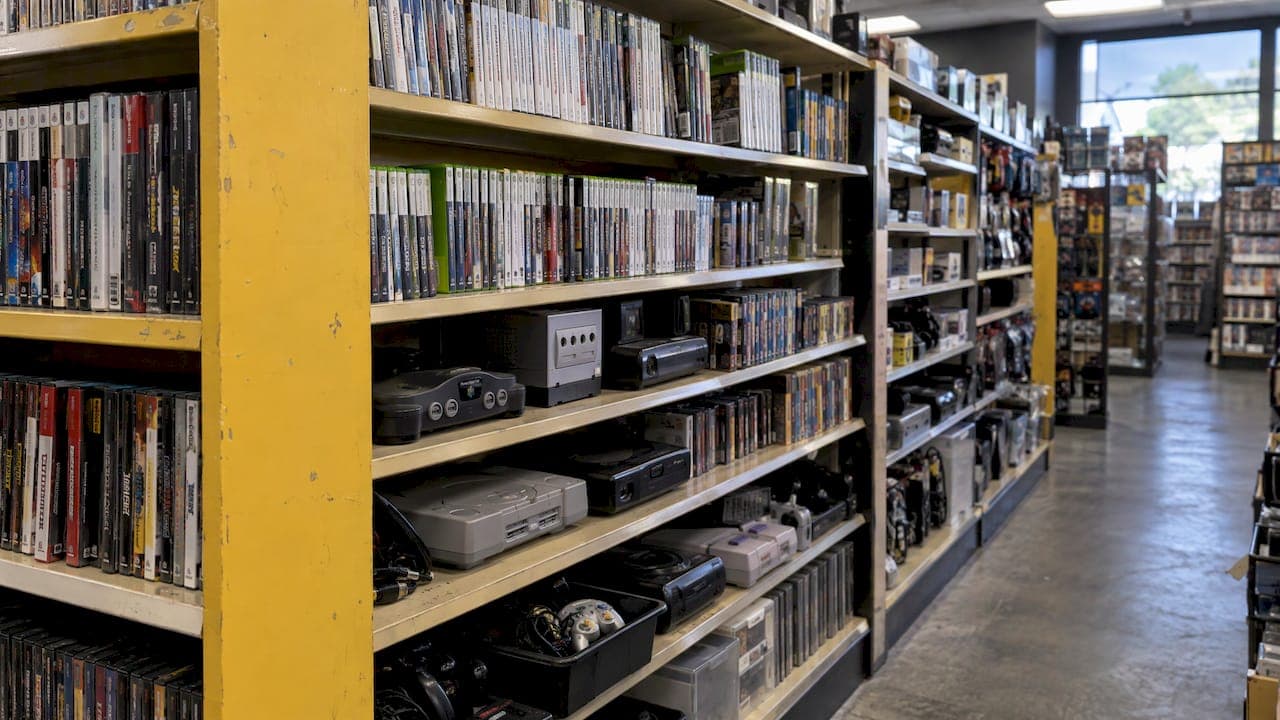
The best used video game store is a local shop that tests what it sells, grades condition honestly, and gives you a clear return window. Finding one takes a few minutes. Judging one takes a short checklist, which is below, along with how trade-ins work, how to read condition labels like CIB and loose, and where to look for game nights and events that many of these shops host.
TL;DR
- Start local: search by city and fandom, then read each shop's trade-in, testing and return policies before you drive over.
- Learn the condition labels (CIB, boxed, loose with manual, loose). They explain most price differences between two copies of the same game.
- Store credit usually pays more than cash on trade-ins, so decide in advance which you want.
- Many shops stock more than games: trading cards, comics, figures and vintage media often sit on the same shelves.
- Check the platform, the disc or cartridge, the console model and the warranty terms before you pay.
Table of Contents
- What you will find inside a used game shop
- How to find used video game stores near you
- How trade-ins work
- Reading condition labels before you buy
- Check compatibility before you pay
- Returns and warranties on used games
- Game nights, meetups and events
- Find a shop near you on Fanboys
- Making a first visit count
- FAQ
- Sources
What you will find inside a used game shop
A used game store is rarely just games. One US retro shop describes thousands of games, systems and accessories, from Atari and NES up to PS5, Xbox Series X and Nintendo Switch. The same shop also buys and sells Pokémon, Yu-Gi-Oh! and Magic cards, action figures, comic books, strategy guides and VHS or Blu-ray discs. That mix is common. The people who bring in games to trade often bring in the rest of the closet too.
That is useful if you collect across categories. A single stop can cover a missing Genesis title, a binder of cards and a back issue. If trading cards are your other habit, a guide on authentic Japanese Pokémon cards explains how to tell real imports from questionable ones, which is a good skill to have before you browse any card case.
Shops differ in focus, and it helps to know which kind you are walking into:
| Type of shop | Typically best for | What to expect |
|---|---|---|
| Retro specialist | Cartridges, older consoles, CIB collectibles | Detailed condition notes, tested systems, higher prices on rare titles |
| Modern used and trade-in shop | Current-generation games, controllers, headsets | Fast turnover, frequent deals, simple trade-in counters |
| Games-and-hobby hybrid | Tabletop, cards, figures plus games | Event nights, play space, wide mix of stock |
| Game lounge or arcade-style store | Playing before or after buying | Consoles to try, tournaments, late-night events |
None of these is better in the abstract. A retro specialist is the right call for a Super Nintendo hunt. A modern trade-in shop is the right call for last year's releases at a lower price.
How to find used video game stores near you
Start with the city, then narrow by what you collect. A shop that is great for Sega might have almost no current-generation stock, and you will not learn that from a map pin alone.
- Search by city and platform. "Retro games" and "used games" surface different shops. Try both.
- Read the shop's own pages. Trade-in rules, testing practices and return terms are usually written down. Shops that explain them tend to follow them.
- Look for community signals. Event calendars, game nights and regular tournaments suggest a shop with a real customer base.
- Check listings from other fans. Local shop directories built from user submissions often catch small or new stores that big map apps bury.
We built Fanboys around that last point. Fans add the stores and events they actually use, so smaller independent shops show up next to the obvious names. If you live in one of these cities, start with a local guide:
- Game stores in Portland, OR
- Game stores in Seattle, WA
- Game stores in Los Angeles, CA
- Game stores in Phoenix, AZ
- Game stores in Atlanta, GA
- Game stores in Philadelphia, PA
- Game stores in Washington, DC
- Game stores in Raleigh, NC
- Game stores in Tampa, FL
- Game stores in Richmond, VA
If you are in Las Vegas, the Las Vegas game stores page is the place to look. Denver collectors can start with collectible stores in Denver, since many collectible shops carry games too.
How trade-ins work
If you want to sell or swap games, the process is similar from shop to shop, and knowing it saves you a wasted trip.
One shop's published process is a good model. You bring the items in without an appointment, show ID, and staff inspect them: wear, tear and use, testing of systems and accessories, and checks for bans, parental locks or security pins. Then you get a quote, with both store credit and cash options.
A few patterns show up across the shops that publish their rules:
- Condition drives price. Staff check the case, manual and disc. One shop says it also references market data such as PriceCharting and recent eBay sold listings and local demand before making an offer.
- Store credit pays more. The same shop says credit pays more than cash, usually around 25% more. Another says it always offers an extra 20% in store credit, and notes that cash is not always available every day.
- Big collections take time. Large lots have to be sorted and systems tested, so expect to wait or leave them for review.
- You need ID. At least one shop requires sellers to be 18 or older with a valid state-issued ID, and it may adjust an offer if a console needs extra work to function.
Get a better offer
Clean the discs, keep the cases and manuals together, and bring controllers and cables with consoles. A complete item is worth more than the same item in pieces. If you plan to take credit, look at the shop's shelves first so you know what you would spend it on. Credit that you cannot use is not worth the bonus.

Reading condition labels before you buy
Condition language is where most confusion happens. Two copies of the same game can differ in price because one has the box and the other does not.
One shop's published guide defines the common labels this way: CIB means game, manual and original case with boxart; Boxed means game plus original box; Loose with Manual means game plus the physical manual; Loose means no box or manual. The same guide describes "Good" as minor label wear and scratches, with boxes that may show wear or slight crushing. "Acceptable" covers boxes that may be broken or missing small pieces, but still hold the game.

CIB can be stricter than it sounds. One grading guide breaks it into the outer box, the inner contents, the manual, and any inserts such as registration cards or posters. It says missing pages take away CIB status, and that reproduction labels are not authentic. If a seller calls a game CIB, ask what is in the box.
Inspect it yourself
Grading specialists note that you should use strong light when judging condition, because damage and marks often do not show under ambient lighting. Tilt the disc under the store's brightest light. Look at the label side and the data side. On cartridges, check the label edges and the screws for signs of opening.
A short checklist at the counter:
- Disc: scratches, rings, cracks around the hub.
- Cartridge: label condition, clean contacts, no cracks in the shell.
- Case and manual: present, matching, not water-stained.
- Console: all cables, a controller, and no sticky or damaged ports.
- Price: compare the tag with what similar copies sell for in your area.
If a shop says it tests its stock, ask what that means. Some stores say staff are trained to spot fakes and test games, consoles and controllers, with more expensive games played in actual gameplay. Others say every traded-in item is inspected, tested and cleaned before sale. Those are the practices to look for.
Check compatibility before you pay
Compatibility problems are avoidable, and they are usually small ones. Do these checks before you walk to the register:
- Match the platform exactly. Look at the platform name on the spine, not just the title. A game released on multiple generations can have different versions.
- Match the console format. A digital-only console cannot read a disc. Check that your console has a disc drive before buying physical PlayStation or Xbox games.
- Confirm the console model for older systems. Some older accessories and games work with certain console revisions only. Ask the staff which model you are buying, and whether the cables and controllers are the right ones.
- Ask about online and downloadable content. Codes, passes and downloadable add-ons sit outside the disc. Check whether a used copy includes anything you need, and whether the extras are tied to a previous owner's account.
- Look for account locks. Bans or locks tied to an earlier owner are one reason shops inspect trade-ins, as in the process described above.
For used consoles bought from a person rather than a shop, the manufacturer's own advice is worth reading. Sony's US buying guide tells buyers to check for image quality problems, overheating and signs of damage, confirm warranty seals are intact and serial numbers have not been removed, and make sure the item is not reported lost or stolen, since a lost or stolen PlayStation product may be permanently suspended from PlayStation services. A shop that tests and logs its trade-ins takes much of that risk off you.
Returns and warranties on used games
Ask about returns before you pay, not after. Policies vary widely, and the numbers below show the range, not a rule.
- One shop lets you return used games and accessories within 14 days, and used consoles within 30 days, as long as the items are in the same visible condition. Its repairs carry a 30-day limited warranty.
- Another says it gives a 90-day warranty on its items and can fix a console or clean a dirty game.
- On the manufacturer side, PlayStation says third-party used products are not covered by its warranty, except certified refurbished products, which include warranty.
So the shop's own policy is the one that matters. Keep your receipt, test the game at home within the return window, and test every console function, not just the first game.
Game nights, meetups and events
A good used game store is often a community space. One shop describes a monthly all-nighter from 5:00 PM to 7:00 AM with tournaments, giveaways and casual matches, along with a lounge of consoles from retro to VR. Another says it hosts events every day, from Magic: The Gathering and Super Smash Bros. to One Piece and a build-and-paint night.
These events are a practical way to vet a shop. Staff who run tournaments tend to know their stock, and regulars will tell you which shop prices fairly. Check the shop's own page or social feed for the current schedule, since nights and formats change.
Our take on used game stores
We think the used game store is one of the last places where a fan can walk in, talk to someone who knows the games, and leave with something they did not know they wanted. The best ones are not just inventory. They test what they sell, explain what they will pay for, and keep a room where people actually play.
That is why Fanboys leans on community-submitted listings. The people who buy, trade and show up on game night know which shops are worth the drive, and they can add a new shop the day it opens. Our search by fandom and location is designed to put the right shop in front of you, whether you collect retro cartridges, current-generation games, cards or comics. Fans who find a store they love can add it, so the next person finds it too.
We also believe local beats generic. A nearby shop lets you inspect before you buy, ask a question face to face, and come back when something is wrong.
Misty
Find a shop near you on Fanboys
If you are ready to browse, Fanboys lists game stores, comic shops, collectible stores and fan events by city, with search tailored to the fandoms you care about. Pick your city on the Fanboys homepage, or go straight to a local guide like game stores in Portland, OR or game stores in Seattle, WA.

Know a shop that is missing? Add it. Fanboys is built on listings from the fans who use these places, and your local find helps the next collector.
Making a first visit count
A few habits make the first visit to any new shop go well.
- Bring a want list. Write down titles, platforms and the most you would pay. It stops impulse overspending and helps staff find things faster.
- Ask what is behind the counter. Rarer or pricier items are often kept out of reach. Staff will usually show you.
- Ask about a hold or a wish list. Some shops will keep an eye out for a specific title.
- Bring something to trade. Even one or two games can turn into credit toward your purchase.
- Browse the neighbors. Game shops often sit near comic shops and collectible stores. If you are in one of those cities, try comic stores in Portland, OR or collectible stores in Philadelphia, PA for a full day out.
Prices on used games move with demand, so a title that was cheap last year may not be this year. Compare a tag with the going rate for a similar condition and completeness, and buy from the shop that tests, explains and lets you return.
FAQ
Do used video game stores buy games, or only sell them?
Most buy as well as sell, and many build their whole inventory from trade-ins. One retro shop says its entire inventory comes from trade-ins. Bring ID, since shops commonly ask for it when they buy.
Is store credit or cash better for trading in games?
If you plan to spend at the shop, credit is usually the better deal, because shops often pay more in credit than in cash. One shop says credit usually pays about 25% more. If you need the money, ask for both quotes and compare.
Can I return a used game if it does not work?
That depends on the shop. Published policies range from 14 days for used games and 30 days for used consoles to a 90-day warranty at other stores. Ask for the terms in writing and keep your receipt.
What does CIB mean when buying a used game?
CIB means complete in box. The game, original case, manual and any inserts are all present, though shops define it with slightly different strictness. Ask what is included, and check the manual and inserts yourself.
Sources
- Retro Games Plus: video games and collectibles
- Video Game Heaven: trade or sell
- Play & Talk: how trading in games works
- Videogamesnewyork: trade-in and sell
- Another Castle Games: FAQ
- jjgames.com: game condition guide
- Retro Vault: CIB retro game condition grading guide
- Heritage Auctions: video games grading tutorial
- TOTL Games: about
- Gamers Go Retro: about us
- PlayStation: buying guide (US)
- Playback Video Games: return policy
- Paul's Gamerzone
- TCYM: authentic Japanese Pokémon cards