
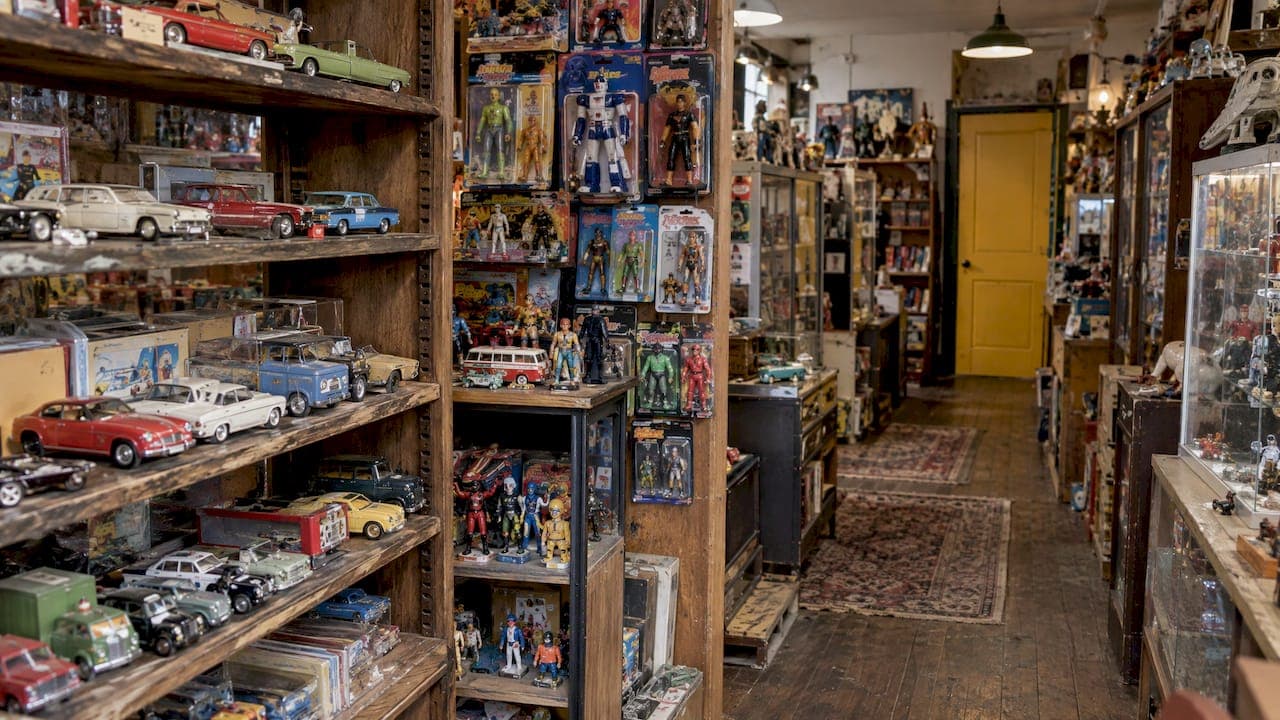
The best vintage toy stores are independent shops that buy, sell and trade, and the fastest way to find one is to search by city and by the kind of toy you want. Then confirm hours and stock before you drive. Once you are inside, a few checks on condition, completeness and markings will tell you whether the price is fair. This guide covers where to look, what you will find, how to judge a piece and how to start a collection without wasting money.
TL;DR
- Search by city and category (action figures, tin toys, dolls, die-cast), then check the shop's hours and recent inventory before visiting.
- Toy conventions and local expos are often better hunting grounds than a single store, because many dealers sit under one roof.
- Judge every toy on paint, working parts, original accessories and markings. A printed patent date does not tell you when a specific toy was made.
- Compare a price against comparable sales before you pay. Values swing with condition, rarity and where the sale happens.
- Start with one category and inexpensive pieces, and store everything away from damage.
Table of Contents
- What a vintage toy store actually is
- What you can find on the shelves
- How to find vintage toy shops near you
- How to judge a vintage toy before you pay
- Is the price fair?
- How to start a vintage toy collection
- Our perspective
- Find vintage toy stores on Fanboys
- Shop-day checklist
- FAQ
- Sources
What a vintage toy store actually is
A vintage toy store is a brick-and-mortar shop, or a dealer with a storefront, that specializes in older toys rather than this season's releases. Many of them buy collections, take trade-ins and sell by the piece. The shelves usually mix decades, so a single visit can take you from 1960s die-cast cars to 1980s action figures still on their cards.
The stores that rank for this search tell you what the market looks like. Some are large, multi-city operations. Others are one-room shops that open Tuesday through Saturday, run by one collector. Some also ship nationally. Expect a lot of variety in size, pricing and how carefully items are graded, which is exactly why knowing what to look for matters.
What you can find on the shelves
Collectible toy collections tend to include early tin toys, action figures, die-cast vehicles, dolls and early mechanical toys. In practice, a good shop sorts its stock into a few clear lanes:
| Category | What to expect | What to check first |
|---|---|---|
| Action figures | Loose figures and carded or boxed examples from the 1970s onward | Joints, paint wear, original weapons and accessories |
| Die-cast vehicles | Cars, trucks and playsets | Chipped paint, bent axles, missing decals |
| Tin and mechanical toys | Wind-ups and early pressed-steel pieces | Rust, working mechanism, replaced parts |
| Dolls | Fashion dolls and older character dolls | Hair, clothing originality, face paint |
| Retro licensed toys | Cartoon, movie and TV tie-ins | Copyright marks, packaging condition |
Many shops also stock trading cards, comics, video games and records next to the toys. If you collect across hobbies, that overlap is a bonus, not a distraction.
How to find vintage toy shops near you
Searching "vintage toy shops near me" works, but it usually returns the biggest listings first, not the best fit. Use a layered approach instead.
- Start with a local directory. A community-built directory lets collectors add small shops that a map search may bury. On Fanboys you can browse collectible stores by city, for example Los Angeles, New York, Dallas, Philadelphia or Tampa.
- Check the shop's own page. Look for current hours, a phone number and recent photos of inventory. Many small shops post new arrivals on social media before a website.
- Call ahead for specifics. Ask whether they carry the line you want, whether they buy collections and whether they take trades. A two-minute call saves a wasted trip.
- Look at neighboring shops. Comic stores, game stores and record stores often keep a case of vintage toys or know the nearest dealer. Fanboys lists comic stores in Denver and game stores in Seattle, among other cities.
- Find a toy show. A toy convention calendar lists shows across the US, and many events promote vintage and modern action figures, comics and cards in one hall. Dates change every year, so check the organizer's page for the current schedule.
Shops versus shows versus online
A shop gives you a relationship. You can return, ask the owner to watch for a piece and sell your own duplicates. A show gives you volume and competing prices in a single afternoon. Online gives you reach but removes the chance to inspect a toy in your hands. Most serious collectors use all three, and local-first buying keeps shipping damage and photo surprises out of the equation.
How to judge a vintage toy before you pay
You do not need to be an appraiser. You need a short checklist and the patience to use it every time.
Condition and completeness
Look for intact paint or graphics, working mechanical parts, original accessories and minimal damage. A figure missing its small accessory is not the same item as a complete one, and the price should show it. Turn the toy over. Check the underside, the battery compartment, the joints and any place a part could have been swapped.

Photograph what you buy before you clean or change anything. A beginner guide to vintage toy collecting recommends recording the front, back, underside, accessories, packaging and markings first, which also gives you a record if you resell later.
Authenticity and age
Use manufacturer marks, then compare the toy against documented examples, auction archives, collector databases or reference books. Be careful with dates. Patent dates printed on a toy only show when the design was first made, not when your specific example was produced. A toy stamped with an early patent date may have rolled off the line decades later.
Construction details help too. Fasteners, materials, logos and typography can separate an early production run from a later reissue. Yellowing and dust alone prove nothing.
Heavily restored pieces
Repainting and replaced parts can make a toy look great and still lower its collector appeal. Ask the seller directly what has been restored, and avoid heavily restored or altered items when you are building a collection. A reputable dealer answers that question plainly.
Is the price fair?
There is no single price for a vintage toy. You can estimate value by comparing your toy with a comparable item at a library or on the web, and the range can run from thousands of dollars to very little depending on condition and rarity. Appraisal programs make the same point: values depend on market trends and the location of the sale, so they move over time and experts can disagree.
A practical routine:
- Find two or three recent sales of the same toy in the same condition, not asking prices.
- Adjust for missing parts, box condition and any repairs.
- Consider consulting vintage toy price guides and appraisal services, which many collectors use for pricier pieces.
- Decide your own ceiling before you start talking to the seller.
- If the shop will trade, ask what credit they offer against what they would sell the piece for. A fair dealer explains the difference.
The same logic works in reverse if you are the seller. Our guide on how to sell collectibles online walks through listing, photographing and pricing.
How to start a vintage toy collection
The advice from collectors is consistent. Experts suggest choosing a specific category, researching manufacturers and production dates, and starting with inexpensive items so you learn the market before you specialize. Here is how that looks in practice.

Pick a lane
Pick the toys you loved or the era that fascinates you: 1980s action figures, tin wind-ups, a particular doll maker. A narrow focus makes you an expert faster, and it makes every shop visit more productive because you know what you are scanning for.
Buy cheap first
Your first few purchases are tuition. Choose common pieces in decent condition and learn what comparable examples sell for. You will quickly spot which dealers price consistently and which ones guess.
Remember why you collect
Condition affects value, but a collection is for your enjoyment. A well-loved toy you adore on your shelf beats a perfect one you bought out of anxiety.
Store and clean with care
For storage, the Smithsonian's guidance for family heirlooms says preservation materials should be pH neutral, acid-free and lignin-free to avoid long-term damage. When cleaning delicate objects like vintage toys, the same toolkit advises a soft, lint-free cloth and no harsh commercial cleansers or chemical solvents. When in doubt on a valuable or fragile piece, leave it as is and ask a specialist before you touch it.
Our perspective
Vintage toy collecting is local at heart. The best finds come from a shop owner who knows you are hunting a specific figure, or from a table at a regional show where a neighbor cleaned out an attic.
That is why we built Fanboys around people, not algorithms. Collectors and shop owners add stores and events themselves, so the directory reflects what is actually in your city, including the small shops that national lists skip. You can search by fandom and location, find nearby events and, through our location-based marketplace, connect with local sellers.
Our advice: use a directory to build a short list, call before you go and learn each shop's specialty. Then come back often. Inventory turns over, and the shop that knows your taste is the one that calls you first.
Misty
Find vintage toy stores on Fanboys
If you are ready to browse, Fanboys lists collectible stores, comic shops, game stores and record stores across US cities, all built from community submissions. Start with your city's collectible stores page or head to the Fanboys homepage to search by fandom and location. Know a shop that is missing? Add it so the next collector can find it.

Shop owners and local collectors can also list merchandise for sale through the marketplace, so your duplicates can find a nearby home.
Shop-day checklist
- Bring a phone with your reference photos and a short wishlist.
- Carry a small flashlight and a soft cloth for inspecting, not cleaning, pieces.
- Ask about restoration, missing parts and return policy before paying.
- Ask whether the shop buys collections or takes trades.
- Keep receipts and photos for your records.
- Pack purchases in padded, acid-free materials for the ride home.
FAQ
What is the best place to buy vintage toys?
For most people, a local specialty shop or a regional toy show is the best start because you can handle the toy and compare prices on the spot. Use a directory to find nearby shops, then call to confirm what is in stock. Online listings are useful for hard-to-find pieces once you know how to judge condition from photos.
How do I know if an old toy is worth money?
Value depends on condition, rarity, completeness and where it is sold. Compare your toy with recent sales of the same item, and consider a price guide or appraisal service for expensive pieces. Prices can range from very little to thousands of dollars, so never assume age alone means value.
How should I start collecting vintage toys?
Choose one category you enjoy, learn the manufacturers and production dates, and buy inexpensive pieces first. Visit a few shops and a show to see how dealers price and describe items. Store everything carefully from day one.
Can I trust the date printed on a vintage toy?
Not by itself. A printed patent date marks when the design was first made, not when your example was produced. Confirm age through manufacturer marks, construction details and documented examples.
Sources
- Collectible Toys and Comics Guide, Journal of Antiques
- Appraising Toys, History Detectives, PBS
- Antiques Roadshow appraisal, PBS
- Collectible Toys From Your Childhood, America's Antique Mall
- Family Treasures Toolkit, Smithsonian NMAAHC
- Vintage Toy Collecting Guide for Beginners, GrandCollector
- Toy convention calendar, ToyCons.com