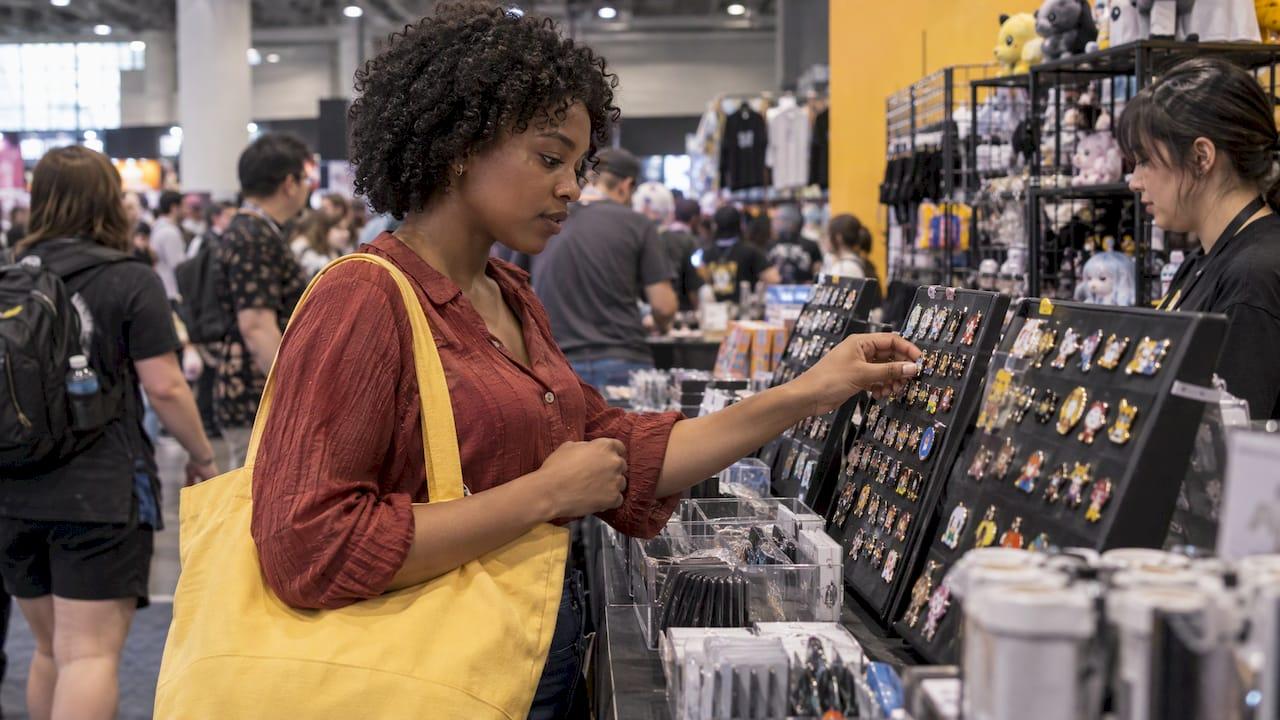
Convention merchandise falls into three groups: official items sold at the event's own stores, licensed products in the dealer or vendor hall, and handmade work in artist alley. Knowing which hall sells what tells you how much to budget, how to spot a real exclusive, and where to find the same goods near home when the weekend is over.
TL;DR
- Official merch (shirts, pins, tote bags) is sold at the convention's own stores. Dealers sell licensed toys, comics and collectibles. Artist alley sells original and fan-made work.
- Walk the whole hall before you buy. The same item is often cheaper a few aisles away.
- Exclusives usually carry a sticker, stamp or numbering. Keep seals and packaging intact if you care about resale value.
- Vendors apply to sell, and rules differ by show and by hall, so check each convention's own application page.
- After the show, local comic and collectible stores are the easiest place to keep the hobby going. Fanboys lists them by city.
Table of Contents
- What counts as convention merchandise
- What fans actually buy
- Official merchandise: what the big shows sell
- What things cost
- Official, dealer or artist alley: how they differ
- Convention merchandise vendors: how selling works
- How to check an exclusive before you pay
- Smart shopping strategy at the show
- Perspective: the con is the start, the local shop is the habit
- Keep the hobby going after the convention
- FAQ
- Sources
What counts as convention merchandise
The phrase covers more ground than most people expect. One con shopping guide separates the dealer's room, where official merchandise is sold, from the artist's room, where fan-made products and original artwork are sold. Together those halls carry posters, keychains, dice, figures, tabletop and card games, plushies, cosplay accessories, graphic T-shirts, manga and comics, jewelry, mugs, stickers and badges.
At a large regional show, the range is easy to see. The Grand Rapids Comic-Con FAQ says more than 175 vendors sell new and vintage toys, comic books, posters, graphic novels, action figures, plushies, gaming items, movie and TV collectibles and model kits. Artists at the same show sell original prints, plushies, pins and buttons, and sculptures.
Think of it as three shelves:
- Official event merch. Made for that convention and that year. It is usually apparel, pins, magnets, tote bags and similar keepsakes.
- Licensed products from dealers and exhibitors. Figures, statues, comics, trading cards, games, manufactured costumes, books and posters.
- Independent creator work. Prints, handmade jewelry, zines, stickers, sketches, commissions and original paintings.
What fans actually buy
Survey data is older, but it still shows the pattern. In a 2015 Eventbrite study, the items fans said they always or usually bought were original art and prints (37%), toys, figures and collectibles (28%), and fashion merchandise and T-shirts and collectible comics and graphic novels (27% each). About 20% regularly bought celebrity autographs, while nearly 38% never did.

It is a useful reminder that the biggest category is not the big-name product. It is art by the person standing at the table. If your budget is small, that is often where the most personal item is.
Typical items by fandom
| If you collect | Look for | Where in the hall |
|---|---|---|
| Comics and manga | Back issues, graphic novels, variant covers | Dealer hall, comic vendors |
| Figures and statues | Action figures, scale statues, vinyl figures | Dealer hall, exhibitor booths |
| Anime goods | Figurines, plushies, keychains, replica props | Dealer hall and artist alley |
| Art | Prints, sketches, originals, stickers | Artist alley |
| Apparel and keepsakes | Graphic tees, pins, tote bags, lanyards | Official store, artist alley |
| Card and tabletop games | Booster products, dice, board games | Dealer hall, gaming area |
Official merchandise: what the big shows sell
Official stores sell items you cannot get later in the same form. The San Diego Comic-Con 2026 official store, produced by All Star Outfitters, offered graphic T-shirts, limited-edition trading pins in five themed sets, magnets, keychains, patches, stickers, tote bags, tumblers, lanyards and washi tape, with some bag tags limited to 100 units.
Exhibitor booths add another layer. A report on the 2026 show described the Sideshow and Hot Toys booth as carrying hundreds of products, including 1/6 scale action figures, deluxe statues, limited-edition art prints and life-size collectibles from Marvel, DC, Star Wars, Aliens and Predator.
If you cannot attend, the realistic goal is to know what exists before the show. Many of the biggest releases are announced in advance, so a short list of targets beats wandering the floor hoping to get lucky.
What things cost
Prices vary by show, city and rarity, so treat these as ranges, not quotes. At SacAnime Spring in Sacramento, the Sacramento Bee reported anime-themed Funko Pops at $15 to $40 depending on rarity, some reaching $150 to $200 with autographs, and anime figurines at about $35 to $45.
In artist alley, a vendor's account of the 2024 L.A. Comic Con described pins and keychains at $5 to $15, prints and T-shirts from $30 up, and original art from $50 to over $1,400. The same account noted that table space started at $450, which helps explain why small items cluster at the low end.
One attendee-spending estimate says the average San Diego Comic-Con attendee spends around $700 on exclusives, food and drink, and artwork. Use that as a ceiling for the biggest show in the country, not a target for a weekend convention near you.
Official, dealer or artist alley: how they differ
The hall you are standing in tells you what the seller is allowed to offer. Rules are set by each convention, which is why you see so much variety.
Artist alley is for the creator's own work. Awesome Con states that everything sold must be the work of the creator at the table, and that resellers, art brokers, mass-produced items, retailers and large publishers are not approved for its Artist Alley. It also prohibits items that reproduce official artwork, such as pins, bags and keychains using official art. Rose City Comic Con says its Artist Alley is curated rather than first-come-first-served, and prior acceptance does not guarantee a spot.
The vendor area is for licensed product. METROCON defines its Vendor Area as for exhibitors selling licensed products and distributing merchandise on behalf of manufacturers, such as DVDs, manga, figures, T-shirts, statues, books and posters.
Some shows sort by what you sell. A Tanoshii Con vendor application places sellers of comics, collectibles, clothing, anime and games in the Vendor Area, and artists, makers, authors and cosplayers in the Artisan Alley.
For you as a buyer, the practical meaning is simple. A pin by a named artist at a small table is likely original work. A box of licensed figures at a larger booth is manufacturer product. Both are legitimate, and they are priced for different reasons.

Convention merchandise vendors: how selling works
If you want to sell rather than buy, plan on an application, not a walk-up table. METROCON's exhibitor packet says it uses an application-based approval process, requires the correct application type for your status, and warns that selling products materially different from those described can lead to warnings, fines or removal.
A few patterns repeat across shows:
- Pick the right category. Resellers, makers and publishers are usually reviewed separately.
- Describe your products accurately. What you list on the application is what you are allowed to sell.
- Know the prohibited list. The Kameha Con creator booth application says vendors cannot sell weapons or swords, tobacco or vape, food or drink, animals, timeshares or bootlegs, and that vendors are responsible for following local, state and federal tax laws.
- Expect to commit the full run. Awesome Con requires artists to appear all three days.
Application windows and fees change every year, so use each convention's own page for the current schedule. If you collect and want to move pieces outside the convention circuit, our guide on how to sell collectibles online walks through the steps.
How to check an exclusive before you pay
Exclusives are the part of convention shopping where mistakes cost real money. A GeekWire feature explains that exclusives are items sold only at San Diego Comic-Con, and that most carry a sticker, stamp or other mark showing they are unique to that time and place. It also notes that companies often make exclusives as limited-run variations, such as a color change, rather than one-of-a-kind pieces, and many arrive numbered.
That difference matters. A numbered run of a few thousand is scarce, but it is not unique. If you are weighing limited edition Pokémon cards, the same logic applies: understand how large the run is and how the edition is marked before you pay a premium.
A short checklist at the booth:
- Find the mark. Look for the exclusive sticker, stamp, foil or print-run number on the item or box.
- Check completeness. Box, inserts, accessories and any certificate should all be there.
- Keep it sealed if value matters. Leave sealed packaging sealed unless you plan to display the piece. A comic-collector blog claims opening a sealed convention variant can cut its value on resale, so decide before you open it.
- Get a written receipt for expensive pieces. Ask for the item description, stated condition, price and seller identification.
- Compare recent completed sales. Match the same variant and condition, not just the same character.
For comics, ask for one specific grade, not a vague description, and require clear photos of front, back, spine and corners when buying remotely.
Smart shopping strategy at the show
The best-known advice is the simplest. The Sacramento Bee's convention shopping piece gives a golden rule: never buy the first thing you see. Walking the vendor hall first often shows the same merchandise cheaper. In that report, a rare in-box Hatsune Miku figurine at $45 compared well with online prices of $60 to $100 before shipping.
A plan that works at almost any size of show:
- Make a short list before you arrive. Include a hard cap per category.
- Walk one full lap with no purchases. Note booth numbers on your phone.
- Go to exclusives first if they are your priority. Some are limited, and some need advance steps.
- Carry small bills and a tote. Artist alley tables are often small operations.
- Budget for the next day. Prices sometimes feel different once the crowd thins, but sold-out exclusives do not come back.
Our guide to finding comic book shows near you covers how to choose which events are worth the ticket.
Perspective: the con is the start, the local shop is the habit
We built Fanboys because fans told us the same thing: a convention feels like a whole community for a weekend, then it ends and the connection is gone.
Our view is that merchandise is best when it comes from people who care about it. That is true at a convention table, and it is true at the comic shop ten minutes from your house. Our directory is community-driven, so people who know their city add the stores and events that matter to them.
That is also why we pair listings with a marketplace for local merchandise and with deals from local stores. Our aim is to make it easy to search by fandom and location, whether you want anime, comics, trading cards, records or collectibles. A convention buy is a great story. A local shop is where the hobby keeps going between shows.
Misty
Keep the hobby going after the convention
A convention finds you a few items. A local store gives you somewhere to ask questions, trade tips and pick up the next issue or release. Fanboys is a directory of those places, with listings added by fans and shop owners, plus event listings and city guides.
If the show was in San Diego, our collectible stores in San Diego and comic stores in San Diego pages are a natural next stop. For other cities, browse comic stores in Seattle, collectible stores in Los Angeles or game stores in Portland.

Want to see what is close to you? Start at the Fanboys home page and search by fandom and city. You can also watch collector reels from local comic shops, or read how to find and judge vintage toy stores if older figures are your thing.
FAQ
What is the difference between official convention merchandise and what artists sell?
Official merchandise is made for the event or licensed by manufacturers and sold in official stores and the dealer hall. Artist alley is for fan-made products and original artwork by the creator at the table. Many shows enforce that split with their own application rules.
What can I buy at a comic con?
Expect comics, graphic novels and manga, action figures, statues, toys, card and board games, prints, posters, T-shirts, hats, bags, jewelry and props. Larger shows add exclusives and signed memorabilia. The Grand Rapids Comic-Con vendor list is a good example of the range at a regional show.
How do I know a convention exclusive is real?
Look for the sticker, stamp or numbering on the item and keep the packaging intact. Exclusives are often limited-run variations, so check the run size and compare recent sales of the same variant. For expensive pieces, ask for a written receipt with the item description, condition and seller details.
How do vendors get a table at a convention?
Through an application reviewed by the convention. Categories, fees and deadlines differ by show, and some, like Rose City Comic Con's Artist Alley, are curated. Check the convention's own application page for the current schedule.
Sources
- What Do They Sell at Anime and Comic Conventions?
- Eventbrite Fandoms Study Reveals Insights Into Con Attendees
- FAQs, Grand Rapids Comic-Con
- SDCC 2026 Official Store: Exclusives and Collectibles
- Sideshow, Hot Toys Shine at SDCC 2026
- Budget tips for shopping SacAnime Spring at CalExpo
- The Life of a Small Business at a Comic Book Convention
- Industry Mini Dive: Comic-Con
- Awesome Con Artist Alley
- Rose City Comic Con Artist Alley Application
- METROCON Exhibitor Information Packet 2026
- Tanoshii Con Vendor Application
- Kameha Con Creator Booth Application
- Exclusive! The inside story of Comic-Con's most coveted collectibles
- Limited Edition Pokémon Cards: What They Are and How to Buy