The best graphic novel store is usually an independent comic shop within a short drive, and the quickest way to find it is to search by city and by what you read, then confirm hours and stock before you go. Comic shops still carry deep graphic novel shelves, manga, kids' sections and back issues, and the right one depends on your taste more than on its size. On Fanboys you can search local comic stores, collectible stores and game stores by fandom and location, with listings that readers and shop owners add themselves.
TL;DR
- Independent comic shops are still the main place to buy graphic novels in person: industry estimates count more than 2,500 comic stores in North America.
- Graphic novels make up about 18% of a typical comic store's sales, so most shops stock a real shelf of them alongside new comics, toys and games.
- Every shop has a specialty (back issues, indie, manga, kids, tabletop), so match the shop to what you want before you drive.
- Call ahead for a specific title, a pull list, or a trade-in, because locator tools show distance, not stock.
- Browse city pages on Fanboys to compare shops near you, then check events like Free Comic Book Day.
Table of Contents
- Are graphic novels still sold in stores?
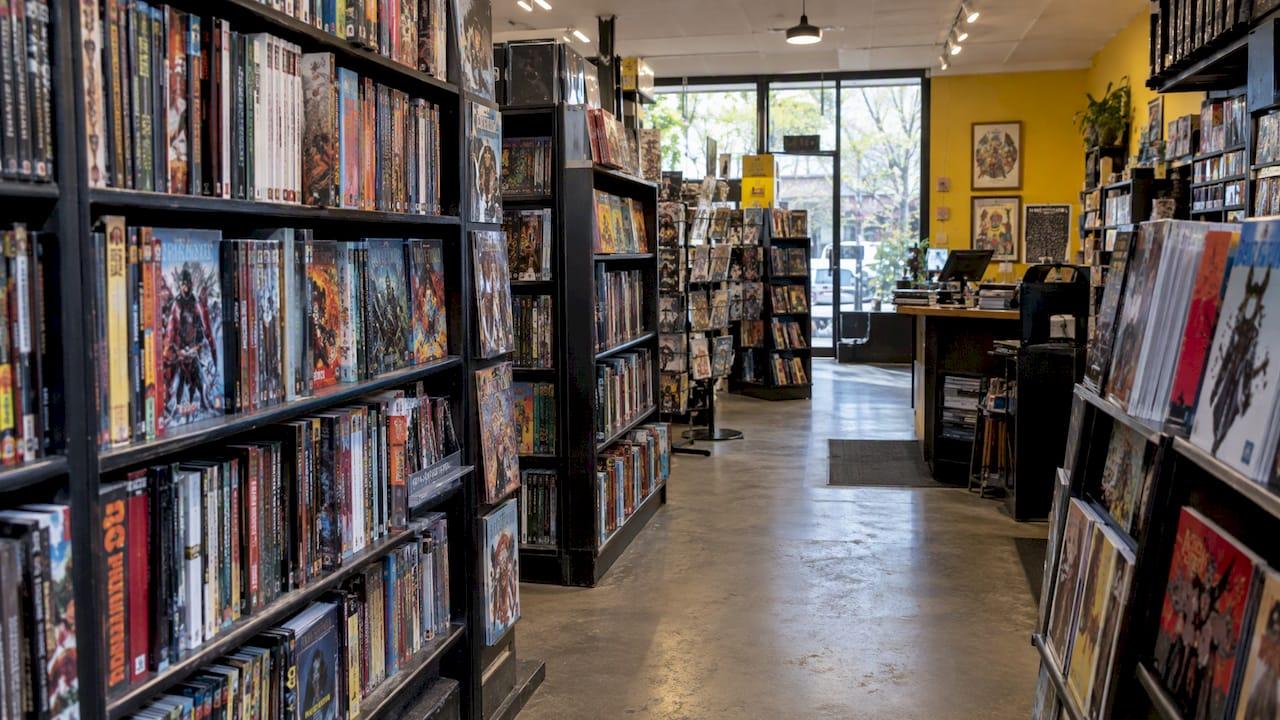
- What a graphic novel store actually carries
- How to choose the right shop for you
- Finding graphic novel stores near you
- Check before you go: hours, stock and events
- Events that bring graphic novel fans to the shop
- Graphic novel shops for kids and families
- If you want to sell or trade
- Our perspective
- Find your next graphic novel shop
- FAQ
- Sources
Are graphic novels still sold in stores?
Yes. Digital comics are everywhere, yet the network of independent comic retailers, often called the Direct Market, still numbers more than 2,500 stores across North America. GamesRadar+ explains why it persists: a shop gives you a more personal experience and direct contact with people who know comics, something a download page cannot.
That human side matters most with graphic novels. A shelf of collected editions is overwhelming if you don't know the difference between a superhero trade paperback, a literary memoir and a manga volume. A good clerk can point you to the right book in a minute, and a good shop remembers what you liked last time.
Big bookstore chains carry graphic novels too, but their selection tends to follow bestseller lists. Comic shops go deeper: small press titles, imports, signed copies, older volumes and the new release that hit the shelf this week.
What a graphic novel store actually carries
A comic shop is rarely only a graphic novel store. The ComicsPRO retailer survey reported by ICv2 shows how a typical shop's sales break down: new comics at 38%, graphic novels at 18% and back issues at 16%. The same survey found that over 80% of stores sell toys, over 60% sell card games, and over 50% sell board games and role-playing games.
So when you walk in, expect:
- Collected editions and original graphic novels. Superhero collections, indie and literary work, young readers' titles and manga volumes, often shelved by publisher or genre.
- New weekly releases. New comics typically land on Wednesdays, and a pull list lets you reserve them.
- Back issues. Boxed and bagged single issues, often organized by publisher and title.
- Collectibles and games. Figures, statues, trading cards, board games and tabletop supplies.
The range between shops is wide. JHU Comic Books in New York City, which has been around since 1983, lists kids comics, international and literary comics, mature-readers titles, manga, small press, zines and mini-comics, plus statues, apparel and collectible card games. That is a good picture of how much one shop can hold under one roof.
If your reading goes past graphic novels into manga, our guide to finding the right manga store near you covers what to look for on those shelves. For a quick read on what is happening in anime and manga right now, this anime and manga news roundup is a handy companion.

How to choose the right shop for you
The 824 Journal's guide to Los Angeles and Orange County shops makes a simple point that applies in every city: each shop has one main strength, and most do more than one thing. The strengths it names are back issues and vintage, indie and small press, events and signings, tabletop and gaming, family-friendly, collectibles and toys, and manga and anime.
Use that as your filter. Ask what you want from the visit, then pick the shop built for it.
| What you want | Shop type to look for | What to check |
|---|---|---|
| Newest graphic novels and series volumes | A shop with a large new-release and trade paperback wall | Whether it has a pull list and how often it restocks |
| Literary, indie or small press work | An indie-focused shop | Whether it carries zines, mini-comics and local creators |
| Manga and anime | A manga-heavy shop | Volume ranges, imports and collectible figures |
| Older runs and hard-to-find volumes | A back-issue and vintage shop | How the stock is organized and whether it buys collections |
| Something for kids | A family-friendly shop | Whether it has a dedicated young readers' section |
| A community to belong to | A shop with game nights and clubs | Weekly events and book clubs |
An events-driven shop is worth seeking out if you want more than a transaction. Book Riot's tour of unusual US comic shops describes Floating World Comics in Portland, Oregon, as hosting hundreds of events, signings, readings, performances and exhibits, and Comicazi in Somerville, Massachusetts, as running something nearly every night, from board game nights to Magic tournaments and comic book clubs.
Finding graphic novel stores near you
Start with your city, then narrow by interest. Fanboys is built around exactly that: local listings for comic shops, collectible stores, game stores and fan events, searchable by fandom and location, with shops and events added by the community so the map reflects what fans actually visit.
If you live in one of these cities, jump straight to a local page:
- Comic stores in Los Angeles, CA and Long Beach, CA
- Comic stores in San Diego, CA
- Comic stores in Portland, OR
- Comic stores in Seattle, WA
- Comic stores in Denver, CO
- Comic stores in Phoenix, AZ
- Comic stores in Indianapolis, IN
- Comic stores in Washington, DC
For the two biggest comic markets, we also have full city guides: comic book stores in New York City and comic book stores in Chicago.
If you want to see comics, games and collectibles in one trip, the collectible and game store pages help. We list collectible stores in Philadelphia and Los Angeles, and game stores in Portland and Seattle, among others. And if your hobby stretches to arcade cabinets, there are places to buy, sell and trade new and used pinball machines too.
Check before you go: hours, stock and events
A listing tells you where a shop is. It cannot tell you whether the one book you want is on the shelf this afternoon. DC's own blog makes this point about shop locator tools: they only show the stores closest to you and don't account for whether a shop has a specific book in stock, so a quick call before you head out is worth it.
A short routine saves wasted trips:
- Pick two or three shops from a city page, based on specialty and distance.
- Look at the shop's own social pages for recent posts about hours, new arrivals and events.
- Call for specific titles. Ask the shop to hold a copy if you are driving a distance.
- Ask about a pull list if you want new releases. Per the 824 Journal, pull lists are free at most shops, holds are usually ready the same day, and they often come with a discount on new issues.
- Confirm event details the day before, especially for busy days with guests or limited giveaways.
Shop owners can help the whole community by keeping their Fanboys listing current, and readers can add a store we are missing so the next person finds it.
Events that bring graphic novel fans to the shop
Shops are at their liveliest on a few recurring days:
- Free Comic Book Day falls on the first Saturday in May.
- Halloween Comic Fest brings free horror and Halloween-themed comics to participating shops in October.
- Local Comic Shop Day usually falls in late November.
Those dates come from GamesRadar+'s overview of comic shops. Check the official event sites for the current year's schedule.
On Free Comic Book Day, the comics really are free: publishers produce special editions and shops give them away. Each shop sets its own limits, commonly 3 to 10 free titles per person, and popular titles can be gone by early afternoon, so go early. Many readers also pick up a graphic novel on the way out, which is how a free day turns into a favorite shop.
Beyond those days, many shops run book clubs, signings, game nights and card tournaments through the week. For conventions and larger gatherings, see our guide to comic book shows near you.
Graphic novel shops for kids and families
Many readers searching for kids' comic book stores want the same thing: a shop where a child can browse safely and leave with a book they will actually read. A few habits help.
- Look for a young readers' section. Some shops carry kids comics as a distinct category. JHU Comic Books, for example, lists kids comics separately from its mature-readers titles, which shows how shops can organize for different ages.
- Ask the staff. Tell them your child's age and what they already enjoy, whether that is superheroes, animals, adventure or manga. Clerks recommend books all day.
- Check what's near the child's reach. Shops that carry mature titles usually shelve them apart from kids' books, but take a quick look at the aisle your child will walk down, and read back covers when in doubt.
- Time your visit. Wednesday new-release days draw crowds. A weekday afternoon is often calmer for a first visit.
- Look for kids' clubs and events. Some shops run comic book clubs for young readers, so ask whether one is running near you.
The family-friendly strength named in the 824 Journal's guide is a good search term when you scan a shop's description. Our city pages let you compare what each shop says about itself before you go.
If you want to sell or trade
Buying is only half of the hobby. If you have a box of graphic novels and back issues to move, call first. The 824 Journal advises that many shops buy back issues only on certain days or by appointment, so a call saves you hauling a heavy box for nothing.
Fanboys also includes a location-based marketplace where local collectors and sellers can post merchandise, so buyers nearby can find it. It suits the kind of items a nearby buyer would like to see in person.
Our perspective
Most people start their search with a big retailer and a list of bestsellers. Then they find the shop two neighborhoods over with a wall of small press books, a clerk who knows the series they love, and a Thursday game night. That is the point of a local graphic novel store.
We built Fanboys around that idea. Fans know their own neighborhoods better than any national database does, so we let fans and shop owners add stores and events themselves. That keeps the listings tied to what the community actually cares about, whether you are after manga, comics, collectibles or a game night.
Our advice is to search by what you read and where you live, pick a shop whose strength matches your taste, and go. The first visit usually decides whether it becomes your place.
Misty
Find your next graphic novel shop
If you are ready to look, start with the city page closest to you. Our comic stores in Los Angeles page is a good example of how listings are organized, and the Fanboys homepage lets you search comic shops, collectibles and fan events by fandom and location. Shop owners and fans can add a store or event so the next reader finds it.

For a look at shops in action, our comic shop videos and collector reels show what a visit looks like before you set out.
FAQ
Where is the best place to buy graphic novels?
For most readers, a local independent comic shop. It has the widest range of graphic novels, staff who can recommend titles, and pull lists for new releases. Graphic novels are about 18% of a typical shop's sales, so the shelves are substantial. Use a city page on Fanboys to find shops near you.
Are comic books still sold in stores?
Yes. Industry estimates put the number of comic stores in North America at more than 2,500, and many run weekly new-release days, events and clubs. Digital comics are widely available, but shops offer a personal experience and a community that downloads do not.
How do I find graphic novel shops near me?
Search by your city on a local directory, then narrow by interest, such as manga, indie comics or kids' titles. Pick two or three shops, check their social pages for current hours and events, and call about any specific book before you go.
Do comic shops have kids' graphic novels?
Many do. Some shops have a dedicated young readers' section, and staff can suggest age-appropriate titles if you tell them how old your child is and what they like. Ask whether the shop runs a kids' comic club or family events.
What else do comic shops sell besides graphic novels?
Most sell new comics, back issues, toys and figures, trading cards and tabletop games. Over 80% of stores sell toys and over 60% sell card games, according to the ComicsPRO survey.
Sources
- ICv2: ComicsPRO Releases Retailer Survey Results
- GamesRadar+: Comic shops, what they are and what to expect
- About JHU Comic Books
- The 824 Journal: Comic Book Shops in Los Angeles and Orange County
- Book Riot: The Most Unique Comic Book Stores Across the USA
- DC Comics: New Updates, We've Made Buying Comics a Lot Easier
- Designbeep: Free Comic Book Day, How the Biggest Day in Comics Works