
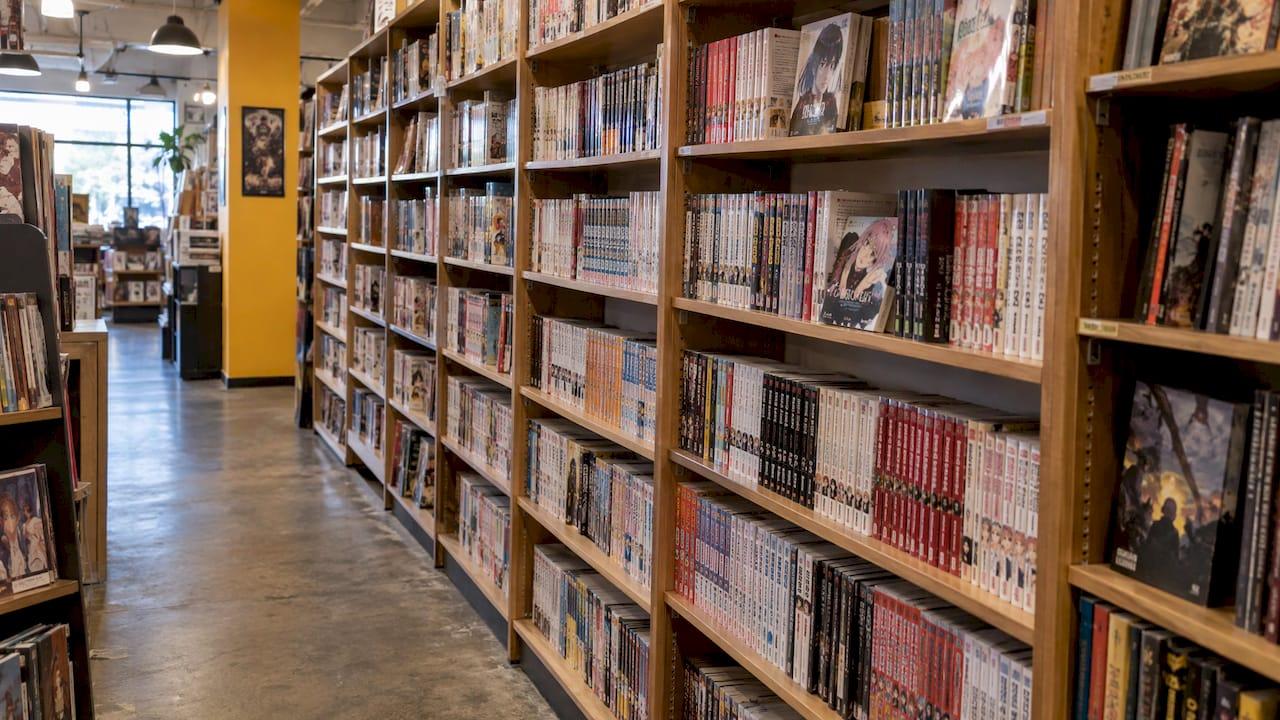
The best manga store is usually the one within a short drive that stocks the series you collect, sorts its shelves in a way you can navigate, and lets you flip through a volume before paying. That can be a comic shop, an independent bookstore with a big manga wall, a used bookstore or a Japanese-focused shop. This guide shows you how to tell them apart, where to look, what to check on used copies and box sets, and how to find stores that host events.
TL;DR
- Comic shops, general bookstores, used bookstores and Japanese-import shops each suit a different kind of buyer. Match the type to what you want.
- Online retail leads U.S. manga sales, but a local store lets you inspect printings, condition and box sets in person.
- For used manga, check edition, ISBN, completeness and condition. Ask for photos of the spine and copyright page if you can't visit.
- Check a shop's event calendar before you go. Game nights, release parties and annual comic-shop days are good ways to meet other readers.
- Fanboys lists local shops by city and fandom, and community members add the stores that deserve to be there.
Table of Contents
- The kinds of manga stores you will run into
- Local store or online: how to decide
- How to find manga shops near you
- What a good manga store has beyond the volumes
- Buying used manga: a checklist that works
- How used shops price and organize their stock
- Box sets: where to look and what to check
- Events and meetups at manga shops
- Perspective: why we think local manga shopping matters
- Find your next manga shop on Fanboys
- FAQ
- Sources
The kinds of manga stores you will run into
Not every shop that sells manga is built the same way. Knowing the type tells you what to expect on arrival.

Comic shops. The classic local comic shop usually has a manga section next to superhero books and indie graphic novels. Staff tend to know new releases well and can set up a pull list for ongoing series. Shelves are often organized by publisher or by title, and many shops also carry figures, trading cards and tabletop games.
General and independent bookstores. Many bookstores now give manga its own wall, often alphabetized by series. This is a good place for popular ongoing series, starter volumes and gift buying. Selection beyond the bestsellers varies a lot from store to store.
Used bookstores and secondhand shops. These are the places for out-of-print volumes, gaps in a half-finished series and bargain stacks. Stock changes constantly, so a shop with nothing last month may have a full run this month.
Japanese-focused and import shops. These are typically the widest in range. You may find manga in English and Japanese, light novels, Japanese literature, language-learning books, stationery, anime figures and trading cards under one roof. Some large urban shops separate English and Japanese manga into different sections.
Collectible and hobby shops. These lean toward figures, Funko Pops, cards and displays, but many keep a manga shelf. They suit you if you want volumes and merchandise from the same fandom in one trip.
Local store or online: how to decide
Online shopping is the largest channel. Grand View Research reports that online retail held the biggest share of U.S. manga-market revenue in 2024, and the same report expects offline retail to keep growing as stores improve what they offer and create more immersive experiences for fans. In other words, buying online is easy, and shops are working to give you reasons to walk in.
Here is how the two compare in practice.
| What you care about | Local store | Online |
|---|---|---|
| Seeing the actual copy | Yes, you can check the spine, pages and print quality | Only through photos |
| Same-day purchase | Yes, if it is on the shelf | No, you wait for shipping |
| Staff recommendations | Yes, and often tailored to what you already read | Mostly algorithms and reviews |
| Hard-to-find volumes | Depends on the shop, best at used and import stores | Wide range, but condition varies by seller |
| Events and community | Release parties, game nights, signings | Rare |
| Returns | Check each store's policy | Depends on the seller |
A sensible habit is to use both. Buy ongoing series locally when you can, and go online only for the volumes nobody nearby has.
How to find manga shops near you
Searching "manga near me" in a map app works, but it often misses small shops listed under another category, such as comic store, used bookstore or collectibles. A few ways to widen the net:
- Search by neighborhood and by type. Try "comic shop," "used bookstore" and "anime store" separately.
- Check a community directory. Listings added by local fans tend to include small shops that big directories skip. On Fanboys you can browse by city, for example comic stores in New York, comic stores in Seattle or comic stores in Boston.
- Look at the shop's social feed. New-arrival posts show you what is actually on the shelf this week. Many shops post their hours, event nights and restock days there too.
- Ask in local fan groups. Regional subreddits and Discord servers are full of people who will tell you which shop has the best manga wall.
- Call ahead for a specific title. A two-minute call beats a wasted trip, especially for a box set or a volume in the middle of a long series.
If your city is not listed, you can still use Fanboys to look at nearby metro areas, and you can add a store you know is missing.
What a good manga store has beyond the volumes
When you are picking a regular shop, look past the size of the shelf. These are the details that make a store worth returning to:
- Clear organization. Series shelved in volume order, with separate sections for new releases, box sets and used stock, save you time.
- Range of formats. Standard volumes, omnibus editions, hardcover collector editions and box sets cover different budgets and shelf space.
- Related items. Light novels, art books, figures, trading cards and stationery let you build your fandom around the series you love. Larger Japanese-focused shops also carry Japanese literature and related fiction, which is useful if your taste runs beyond manga into horror and suspense reading.
- Staff who read. If the person at the counter can tell you where to go after a finished series, that is worth more than a discount.
- Pull lists and preorders. If you follow several ongoing series, a shop that holds each new volume for you takes the guesswork out of release weeks.
- A welcoming space. Seating, a reading corner or a table for card games tells you the owners want people to hang around.
Buying used manga: a checklist that works
Used manga is where the biggest bargains and the biggest disappointments are. The same checks apply in a shop and online, but in a shop you can do all of them with your own hands.
Confirm exactly what the book is
Check the language, publisher, volume number, format and edition against the cover and the copyright page. The ISBN is the quickest way to confirm you have the right printing. Comparing an unfamiliar copy with the publisher's own listing or an established retailer's catalog page is the simplest way to catch a mismatch, and that same step helps you spot counterfeits, as this guide to spotting bootleg manga explains. It also suggests checking publisher logos, ISBN or UPC details and copyright information.
Inspect the condition
Look for:
- Loose, missing or torn pages
- Cracked or heavily creased spines
- Writing, stickers or library marks
- Water stains, mold or a strong odor
- Sun-faded covers
Smell matters. A musty book can spread its odor to the rest of your shelf, so it is worth sniffing before you buy. If you are buying remotely, ask for photos of the front and back cover, the spine, the ISBN and the copyright page.
Check completeness
For a box set, make sure every volume is there, along with any extras the set originally included, such as a poster, booklet or card. For a bundled run of a series, count the volumes against what is promised and check that none repeat.

Be skeptical of big claims
"First edition" is a claim that should come with proof. If a seller can't show you the edition line on the copyright page, treat the label as unproven. This matters most for collectors paying premium prices.
How used shops price and organize their stock
There is no single rule, and no official source sets one. Most used shops price by condition and demand. A clean copy of a popular volume costs more than a worn copy of a slow seller, and complete sets of in-demand series usually cost more than the same volumes bought one by one. Many shops sort used manga alphabetically by title, then in volume order, while smaller shops may keep it in mixed stacks by publisher or in bins. Ask whether the shop keeps a want list, because used inventory arrives in unpredictable batches and owners will often call you when a missing volume turns up.
Two habits pay off. First, compare the shelf price with the listed cover price on the back of the book. Second, check the sets shelf separately, since a complete run can be a better deal than buying volumes individually.
Box sets: where to look and what to check
Box sets are popular with readers who want a whole series at once. They appear in three places: the new-release section of a bookstore or comic shop, the collector shelf of a Japanese-focused shop, and the used section, where they are sold with or without the original box. A few checks help:
- Is the box in good shape, with sharp corners and no crushing?
- Are all volumes inside, and do they match the set's contents?
- Are any bonus items, such as a poster or booklet, still included?
- Is the set sealed? A sealed box is hard to inspect, so ask staff whether you can see a display copy or the shop's open copy.
If a shop does not have the box set on its shelf, ask whether it can order one. Many will.
Events and meetups at manga shops
A shop is more than a place to buy. The best ones become the center of a local scene. Typical events include:
- Release-day gatherings for big volumes or new series
- Game nights, including card games and tabletop sessions
- Book clubs and discussion nights for manga and anime
- Cosplay and costume events around local conventions
- Annual comic-shop days. Free Comic Book Day happens on the first Saturday in May, when participating comic specialty shops give away free comics.
Before you go to any event, check a few details: the date and start time, whether it is free or ticketed, whether you need to register or bring your own cards or equipment, the age range if one is stated, and whether the shop will still be open for regular shopping. Shops change event schedules often, so confirm on the shop's own page or social feed on the week you plan to go. You can also check the Fanboys video page for shop tours and collector reels that show what a store feels like before you visit.
Perspective: why we think local manga shopping matters
Manga fans are rarely just buying a book. They are looking for the next series, the other person who loves the same series, and a place where that taste is normal. That is why we built Fanboys around local listings added by the community instead of a single national list.
The people who know which shop has the best used shelf, which store holds a Saturday game night and which owner sets aside new volumes are the fans who live there. When they add a store or an event, the directory gets more accurate for everyone. We think that beats a generic search result every time.
Our advice is simple: find two or three shops near you, learn what each does best, and let them know what you collect. A shop that knows your taste is worth more than any single discount.
Misty
Find your next manga shop on Fanboys
Fanboys is a local discovery platform for fans. You can search by city and by interest, from comics and manga to collectibles and games, then read listings and events added by people in your community. If you collect more than manga, our city pages for collectible stores in Los Angeles and comic stores in San Francisco are good places to start.

Know a shop that should be on the map? Add it through Fanboys so other readers nearby can find it, and look out for deals from local stores and the location-based marketplace for merchandise.
FAQ
Where is the best place to buy manga?
It depends on what you need. For new releases and recommendations, a local comic shop or a bookstore with a manga wall is hard to beat. For out-of-print volumes, check used bookstores first. For a wider range, online retail is the largest channel, according to Grand View Research.
How do I find manga stores near me?
Search a map app for comic shops, used bookstores and anime stores separately, then check a community directory like Fanboys for small shops that map apps miss. Call ahead if you want a specific title or box set. A shop's social feed will also show what just came in.
What should I check when buying used manga?
Confirm the volume, edition and ISBN, then inspect the spine, pages and covers for tears, writing, water damage and odor. For sets, count every volume and any extras. If a seller calls a book a first edition, look for the edition line on the copyright page.
Do manga stores only sell manga?
Many carry much more. Larger shops often stock light novels, art books, figures, trading cards, stationery and related fiction. Comic and collectible shops commonly add games, Funko Pops and other fandom merchandise, so one trip can cover several interests.
Are events at manga shops free?
Many are, but not all. Game nights and release gatherings may be free, while tournaments or special signings can have an entry fee or registration. Check the shop's own page or social feed shortly before you go for the current details.
Sources
- U.S. Manga Market Size And Share | Industry Report, 2030
- How to Spot Bootleg Manga
- Get Ready for Free Comic Book Day
- Japanese Horror Novels: Where to Start, What to Read Next