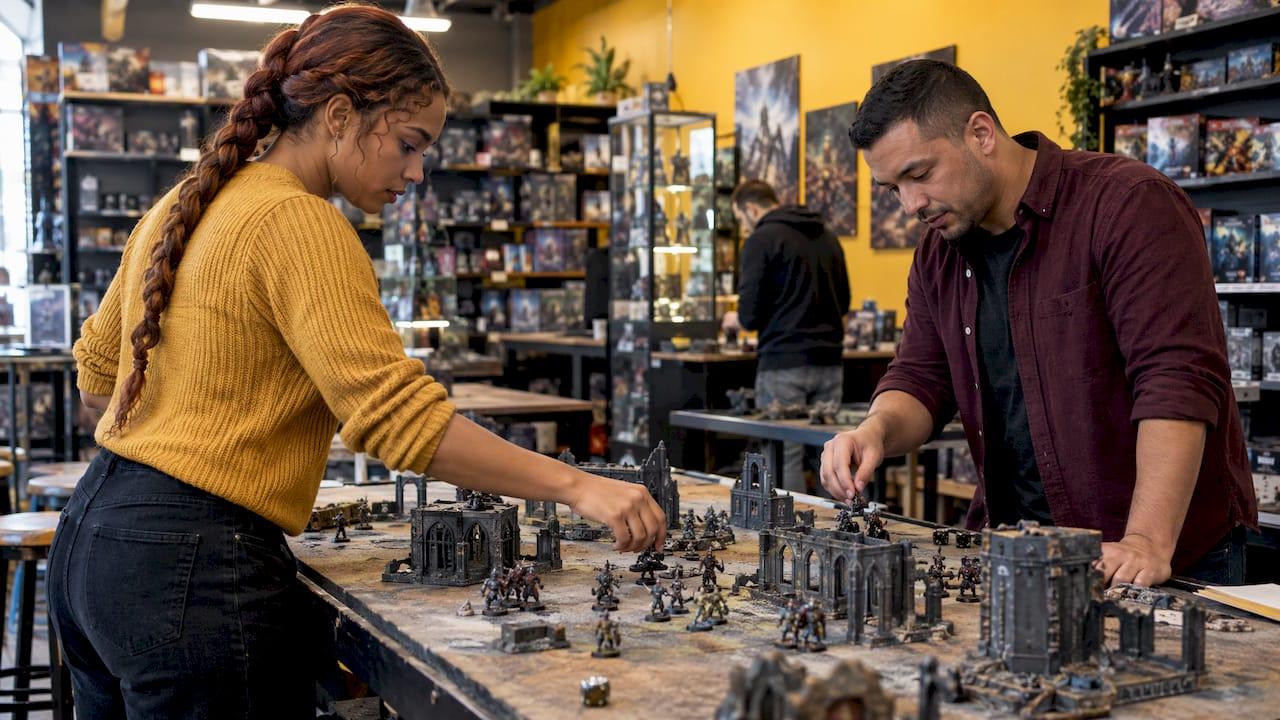
A miniature gaming store is a local hobby shop built around tabletop games played with models: wargames, skirmish games, fantasy battles and role-playing figures. Most also sell paints, brushes, terrain and dice, and the best ones have tables where you can play. To find one near you, search by city and by game system, check the shop's event calendar, and visit on a game night before you commit to buying an army.
This guide covers what these stores are, what you will find inside, how to judge a shop's selection, and what to check before you drive over.
TL;DR
- A miniature gaming store sells models, paints and hobby tools, and usually hosts painting sessions, demos and game nights in the shop.
- "Miniature figure store" is often the same kind of shop, though some figure sellers focus on collecting and display rather than play.
- Search by city and by game system, then confirm hours and event nights directly with the store.
- Used and out-of-print models are often found at local shops, so ask what they have in stock and whether they take trade-ins.
- Many of these shops also serve comics, trading cards and collectibles, so one visit can cover several hobbies.
Table of Contents
- What a miniature gaming store actually is
- What you will find inside
- Events, demos and play spaces
- How to find miniature gaming stores near you
- How to judge a store's selection
- One shop, several hobbies
- Before you go: a visit checklist
- Our perspective
- Find your local shop on Fanboys
- FAQ
- Sources
What a miniature gaming store actually is
The shop sells small models, typically plastic, resin or metal, that players assemble, paint and move across a tabletop. Some are collected for the painting alone. Others are used in battle games with rules, measuring tapes and dice.
Readers type "miniature figure stores" as well, and the two terms overlap heavily. In practice you will meet three kinds of shop:
- Dedicated miniature stores. Shelves of army boxes, paint walls, terrain and several gaming tables. Staff usually play the games they sell.
- General game stores. Board games, card games and role-playing books, with a miniatures section and a few tables.
- Collectible and figure shops. Pre-painted figures, statues and licensed collectibles, with little or no play space.
If you want to play, aim for the first two. If you want to display, the third may be enough, and the first two often carry display-grade models too.
Brand-run stores versus local shops
Some manufacturers run their own stores. Games Workshop, for example, describes its stores as a way to show customers how to collect, paint and play with its miniatures, and as the front end of its manufacturing business. That makes them a good place to learn one system.
Independent local shops usually carry many systems side by side. That is the main reason many players treat their local store as home base: you can try a new game without committing to a single brand.

What you will find inside
Stock varies by shop, but a well-rounded miniature gaming store usually has these categories:
| Category | What it includes | Why it matters |
|---|---|---|
| Army and squad boxes | New-in-box models for popular wargames and skirmish games | The core purchase for starting a game |
| Single and blister-pack figures | Individual heroes, monsters and role-playing characters | Cheaper way to fill gaps or build one character |
| Paints and tools | Acrylic paints, primers, brushes, hobby knives, glue, basing material | You need these to finish anything you buy |
| Terrain and playmats | Scenery, buildings, mats and measuring tools | Makes a table playable and good-looking |
| Dice, rulebooks and accessories | Rules, army books, dice sets, carry cases | Needed for play |
| Used and out-of-print items | Pre-owned armies, older sculpts, discontinued lines | Savings and hard-to-find pieces |
Scale matters before you buy
Models are sold in different sizes, so a figure that looks right in a photo may not suit your game. Role-playing figures, wargame models and display collectibles often follow different size conventions. Ask staff which scale the game you play uses, and make sure terrain and models match.
Events, demos and play spaces
The real draw of a local shop is the table. Typical offerings include:
- Open play. Free or low-cost table time when you can bring your own army and find an opponent.
- Learn-to-play sessions. Staff or regulars teach the basics with loaner models.
- Painting nights. Bring your models and your brushes, and get tips from experienced painters.
- Leagues and tournaments. Ongoing campaigns or one-day events for a specific game.
- Publisher demo days. Manufacturers sometimes support local stores with demo programs. Atomic Mass Games, for instance, described retailer demos for Marvel: Crisis Protocol in July 2025, saying participating stores were equipped with a demo guide for hands-on play.
Those demos matter because they lower the barrier. You do not need to buy a box to find out whether you like a game. You show up, borrow models and play a short round.
If you play role-playing games with miniatures, a browser-based virtual tabletop can also help you prepare characters and campaign maps before you bring figures to the shop table.
Why shops invest in play
Games Workshop's own description of its business suggests why physical locations put effort into teaching: a store turns interest in a product into in-person play, and that keeps people involved over time. The same logic applies to independent stores. Buyers who play stay, and a local Warhammer community also keeps events, tournaments and casual game nights alive when it shops locally.
How to find miniature gaming stores near you
Start broad, then narrow down.
- Search by city and game. Look up your city plus the system you care about, such as a fantasy battle game, a sci-fi skirmish game or a role-playing line. Shops that stock a system usually say so.
- Use a local directory. A directory built from user-submitted listings tends to catch small shops that never rank in search. On Fanboys, community members add stores and events, so listings reflect what local fans actually visit.
- Ask players. Local social groups, Discord servers and convention attendees know which shop has the best tables and the friendliest regulars.
- Check the shop's own calendar. Event nights change by season, so confirm current schedules on the store's own page or social account.
- Look at neighboring categories. Comic shops and collectible stores often carry miniatures or host game nights even when they are not listed as game stores.
City pages to start from
If you live in or near one of these cities, browse the game store listings directly:
- Game stores in Seattle
- Game stores in Portland
- Game stores in Los Angeles
- Game stores in Denver
- Game stores in Minneapolis
- Game stores in Milwaukee
- Game stores in Philadelphia
- Game stores in Charlotte
- Game stores in Washington, DC
For Arizona, there are also pages for game stores in Phoenix and game stores in Mesa.
How to judge a store's selection
A good shop shows its quality in the details. When you walk in, look for these signs:
- Depth in the systems you care about. Not just starter boxes, but expansions, single figures and the paints that match your army.
- A used section. Local stores often carry a mix of new-in-box models and cheaper used armies, and buying in person lets you see exactly what you are getting. The same source notes that most stores offer a 15% discount on new miniatures, so ask whether your local shop runs a similar discount.
- Trade-in or consignment options. Ask whether the shop takes pre-owned collections, or posts listings from local sellers.
- Painted examples. Display models show what the staff and community can do, and they help you pick colors.
- Staff who play. Ask what they are painting right now. A real answer is a good sign.
- Special orders. For out-of-print or hard-to-find models, a shop that will search for you is worth cultivating.
Hunting for unusual and out-of-print pieces
Collectors looking for older sculpts should visit in person and ask directly. Shops rarely shelve everything they own. Back stock, used bins and locked cases often hold the interesting items. Bring a short list with the exact model or set name, and ask staff to tell you when something comes in.
One shop, several hobbies
Miniature gaming rarely lives alone. ICv2's profile of a US store owner reports that customers expand into multiple interests, including figures and collectibles tied to the same fandom as the games they play. A shopper might arrive for trading cards or manga and then start exploring related figures.
That is useful for you. A comic shop or collectible store near you may stock miniatures, host a game night, or know where the nearest dedicated store is. If you want to cast a wider net, try the Fanboys listings for comic stores in Seattle, collectible stores in Denver or collectible stores in Phoenix.
Before you go: a visit checklist
A few minutes of checking saves a wasted trip.
- Confirm hours. Hobby shops often keep evening and weekend hours that differ from regular retail, and they may close early on event-free days.
- Check the event schedule. Find out which nights are open play, which are tournaments and which are learn-to-play. Tournament nights can mean limited free tables.
- Ask about table fees. Some shops charge nothing for open play, others ask for a small fee or purchase. Ask when you call.
- Bring your own models. If you already have a painted or primed army, bring it. Many regulars are glad to give a pickup game to a newcomer.
- Ask about demo models. If you are new, ask if the shop has loaner models or a staff member who can walk you through the first game.
- Confirm stock before a big purchase. If you want a specific boxed set, call ahead and ask the shop to hold it.
- Check age and behavior rules. Some game nights are family-friendly, others run late. If you are bringing kids, ask.
Our perspective
We built Fanboys because fans kept telling us the same thing: the best hobby shop in town is the one nobody can find. Search results favor big listings, while the small shop with the great painting night is buried.
That is why our listings are community-driven. Players add the stores they love and the events they actually attend, so what you see reflects local fan culture, not a national chain's footprint. For miniature gaming, that means you can search by fandom and location and find the shop that fits your game, whether that is a fantasy battle game, a skirmish system or a role-playing campaign.
Our advice is simple: pick a shop, go on a game night, and talk to people. A good store is a place where you learn, trade, paint and play, and where the same faces greet you every week. When you find yours, add it, add its events and help the next fan find it too.
Misty
Find your local shop on Fanboys
Fanboys is a local discovery platform for fans: comic shops, collectible stores, game stores, conventions and community events, all searchable by location and fandom. Listings are user-submitted, so you can add a shop or event that is missing, and local sellers can post merchandise in the location-based marketplace.

Start with the game store page for your city, such as game stores in Portland or game stores in Seattle. If your city is not listed yet, browse the Fanboys home page and add the shop you know.
FAQ
Are miniature gaming stores only for Warhammer players?
No. Many stores carry several game systems, role-playing figures, paints and terrain. Warhammer is a common draw, but local shops often serve players of other wargames, skirmish games and tabletop role-playing games too. Ask what systems the shop supports before you go.
Do I need to buy something to use a store's tables?
Policies differ from shop to shop. Some offer free open play, some ask for a small table fee, and some expect a purchase. Call or check the store's page before your first visit so there are no surprises.
Can I find used or out-of-print miniatures at a local store?
Often, yes. Local stores commonly carry a mix of new boxes and used models, and some take trade-ins or special orders. Bring the exact name of the model you want and ask staff to watch for it.
How do I find game nights and events near me?
Search your city on a local directory, then confirm the schedule on the shop's own page or by phone. Event nights change over time, so the store's current calendar is always the most reliable source. You can also ask regulars at the shop what the busiest nights are.
Is a miniature figure store the same as a miniature gaming store?
Sometimes. Many shops do both, selling models for play and for collecting. Some figure sellers focus on pre-painted display pieces with no tables, so check whether the shop offers play space if that is what you want.
Sources
- Our Business Model, Games Workshop Group PLC
- Marvel: Crisis Protocol Retailer Demos, Atomic Mass Games
- How to Buy Used Warhammer 40k Miniatures, Armies Cheap, Spikeybits
- Vibe Check: Anime Kat, ICv2