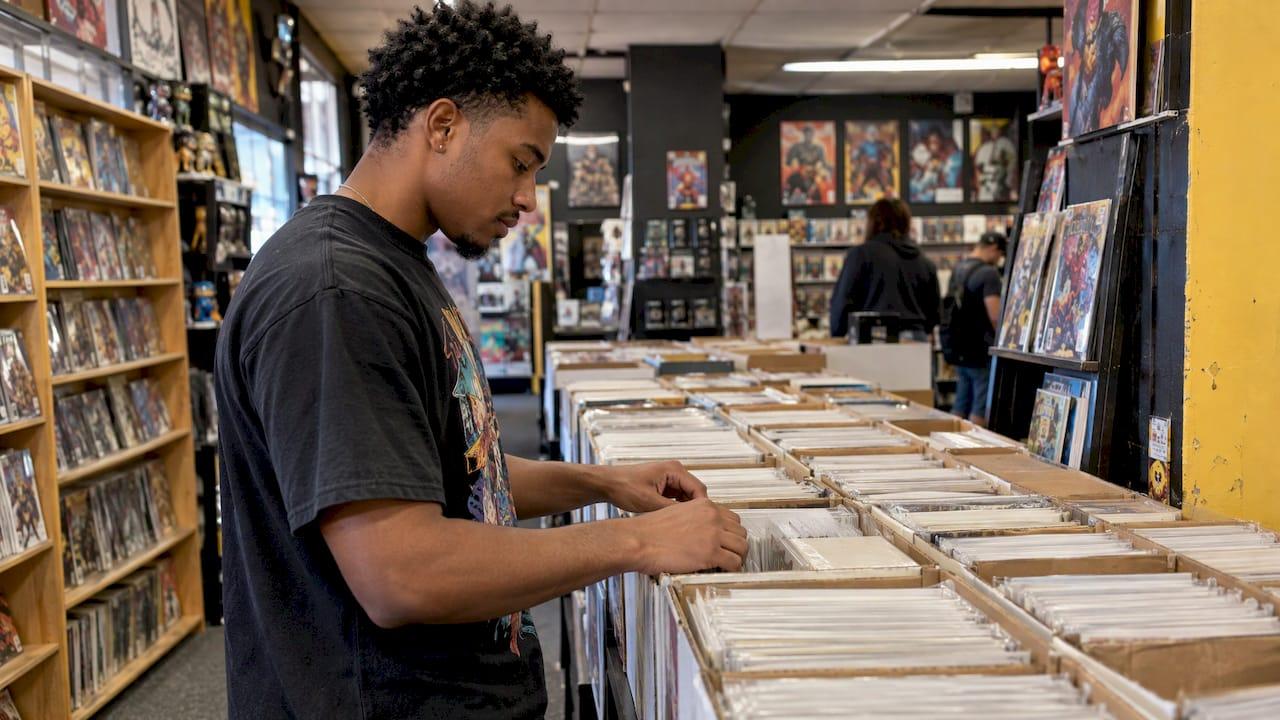
The best used comic book store is a local shop with deep back-issue boxes, in-house grading and a staff that knows your favorite run. The quickest way to find one is to search by city and fandom. Then confirm hours and stock before you go. On Fanboys, community-submitted listings let you search for comic shops by location and by what you collect. That makes it easier to find the shop that fits your pull list, your budget and your weekends.
This guide covers what a used comic shop actually stocks and how to find shops near you. It also covers how to judge condition and price, and how to check a shop before you make the trip.
TL;DR
- Look for shops that say "back issues" and "trade paperbacks" on their own pages. Those are the ones with used stock, and many price books individually.
- Judge a used comic on four things: spine, corners, cover gloss and staples. Ask for a specific grade, never "like new."
- Shops often run weekly events such as Magic: The Gathering nights, kids' classes and creator jams. A good used-comic shop doubles as a local meetup spot.
- Call or check the shop's own page for hours and stock before driving. Inventory changes daily.
- Start with a city search on Fanboys, then narrow by fandom: comics, manga, graphic novels or collectibles.
Table of Contents
- What a used comic book store actually carries
- How to find used comic books near you
- What shops do besides sell comics
- How to judge a used comic's condition
- Reading prices at a used comic shop
- Beyond comics: books and reading for every age
- Check the shop before you drive
- Find your next shop on Fanboys
- Our view: the shop is part of the hobby
- FAQ
- Sources
What a used comic book store actually carries
"Used" covers more than one kind of shelf. Most shops mix three things: back issues (single issues from past months, years or decades), used trade paperbacks and graphic novels, and new releases. The size of each varies a lot, and it shapes which shop you should visit.
Here is the range, from real shops:
- Volume sellers. Fantasy Zone Comics lists over 5,000 used titles across genres and over 60,000 back issues, plus new titles and a large used paperback and graphic novel section.
- Box-digging shops. That's Entertainment! keeps more than 500 boxes of back issues in its showroom, ranging from popular to obscure and recent to vintage. It has no online catalog but takes mail-order inquiries.
- Age-focused shops. Comic Envy in Asheville, NC carries thousands of individually bagged and priced Golden, Silver and Bronze Age back issues. It also stocks independent comics, European comics, manga, storage supplies and a kids' section.
- Specialists. Now Or Never Comics in San Diego focuses on vintage books dating to the 1940s. An SDVoyager interview from June 2019 describes dedicated sections for first appearances, key issues, signed books, variant covers and underground comics.
- Bargain-bin shops. JC Comics in North Plainfield, NJ stocks back issues from the 1940s to current, including a large first-appearance selection. It prices many Silver, Bronze and modern back issues at $5 and $10 and grades them in-house.
The takeaway: decide what you want before you pick a shop. If you want cheap reading copies of a modern run, a bargain-bin shop wins. If you want a key issue, you need a shop that sorts and grades by hand. If you want a long run of one title, go to a volume seller.
How to find used comic books near you
Searching "used comic books" in a general search engine mostly returns national online sellers. For a book you can hold before you buy, you want a local shop. A few habits make the search faster.
Search by city, then by what you collect
Start with your city and the kind of store: comic stores, collectible stores or game stores. A city page that lists shops with addresses lets you compare several at once. On Fanboys you can browse comic stores in Los Angeles, San Diego, San Francisco, Seattle, Denver, New Orleans, Washington, DC and New York. City guides cover New York City and Chicago in more depth.
If your hunt is for toys and slabs rather than paper, collectible store pages exist for Philadelphia, Phoenix, Cincinnati and Denver.
Look for the words that signal used stock
On a shop's own page, these phrases point to real back-issue inventory: "back issues," "Golden, Silver and Bronze Age," "individually bagged and priced," "we buy collections," "trade paperbacks." A shop that lists only new releases and subscriptions is a different kind of store, even if it has a few longboxes in the corner.

If you want graphic novels specifically, our guide to finding graphic novel stores near you explains what to look for.
Ask for the issue, not just the store
Back-issue stock is not usually posted online shop by shop. So contact the shop with the title, issue number and the grade you will accept. Some shops, like the box-heavy one above, take inquiries even without a catalog. Staff who know their boxes can often tell you in a minute whether a book is on hand, and may pull it aside.
Use shops for more than one thing
An event-heavy shop is usually a healthy one. Shops that host Magic nights, kids' art classes and creator meetups tend to know their regulars and their back stock. That brings us to the community side.
What shops do besides sell comics
A used comic shop is often the neighborhood's fan hub. Examples from shops that publish their calendars:
- Neighborhood Comics in Savannah, GA lists free weekly Magic: The Gathering events: a Friday night Commander open play and a Monday night session. It also runs an open night where local writers and artists share their work.
- Anyone Comics in Brooklyn, NY posts a free Friday Night Magic draft, a weekly Sunday comic art class for kids and a monthly Comix Jam for artists and writers on the third Thursday.
- Hello Comics in Charlottesville, VA runs recurring community programming: a youth safe-space hour every third Friday, a Sunday collage afternoon, a biweekly graphic novel book club and children's storytime at the local library.
These are recurring patterns, and shop calendars change month to month. Treat them as a picture of what to look for, then check the shop's own events page for the current schedule. If you also play, our game store pages for cities like Portland, Seattle and Phoenix help you find tables and nights.
How to judge a used comic's condition
Condition drives price. According to Heritage Auctions' grading tutorial, a Mint copy can bring several times the price of the same book in Poor condition. The same tutorial notes that older books in Mint are extremely scarce, and that most higher-grade books on offer fall between Very Fine and Near Mint.
For a raw (ungraded) book in a shop, use a short routine in good light. Comic Book Co.'s 2026 beginner guide points to four areas that account for most grade deductions:
- Spine. Look for stress lines, ticks and spine roll.
- Corners. Check for blunting or creases.
- Cover gloss. Tilt the book to see scuffs and sun fading.
- Staples. Look for rust or misalignment.
The Heritage tutorial goes further for books you will pay real money for. Grade from the outside in: lay the book flat, examine the front and back cover, check the spine, then confirm the centerfold and all interior pages are present. Note page whiteness, chipping and brittleness. A simple inspection mindset for any collectible is covered in this kit inspection checklist, which walks through checking surfaces and details piece by piece.
Graded and slabbed books
A graded comic is scored on page condition and color and sealed in a protective case called a slab. KCUR's Kansas City guide compares it to a famous painting behind glass. A slab protects the book, but it also means you can no longer read it. Comic Book Co. suggests paying for professional grading only when a book is truly valuable or a personal grail.

Buying a secondhand book from a seller you cannot meet
For listings without in-person inspection, a 2026 buying checklist advises asking for one specific grade, such as 9.4 or VF/NM, rather than "like new." It also asks for at least four photos: full front, full back, spine and a top-right corner close-up. For slabs, it says to run the certification number through the grading company's free lookup. A local sale avoids most of this, since you hold the book.
Reading prices at a used comic shop
Prices are set shop by shop. A few patterns help:
- Flat-priced bins. Some shops price run-of-the-mill Silver, Bronze and modern issues at a fixed amount. JC Comics, for example, lists many back issues at $5 and $10.
- Individually priced books. Shops with bagged and priced issues, as in the Asheville example, tell you the grade and price on the bag. Compare it to what you see.
- Key issues. First appearances and other keys sit in their own sections at specialist shops and cost more. The San Diego shop owner said in the 2019 interview that vintage books that sold for $10 to $20 a decade earlier were selling for $100 to $200.
- Pull lists. Comic Book Co. recommends a free pull list at a local shop so you pay cover price on new releases instead of higher shelf prices.
Treat comics as a hobby first and an investment second. Buy the best condition you can afford and buy what you will enjoy reading.
Beyond comics: books and reading for every age
Shops that carry comics often carry reading for all ages: manga, kids' sections and activity books. If you are shopping for a young reader, a draw-your-own comic book with blank panels is an easy way to get them making stories, not just reading them. It pairs well with a trip to a shop that runs kids' art classes.
Check the shop before you drive
Back-issue stock moves daily, and hours shift with holidays and events. Before you go:
- Check the shop's own page or social profile for current hours.
- Look at its events page, especially if you want a quiet browse. A Friday Magic night can fill the floor.
- Call or message with the title and issue number you want, and the grade you will accept.
- Ask whether it buys or trades collections if you have books to sell. Many do.
- Confirm the address on the map before you head out, especially for small shops in shared buildings.
Plan a loop of two or three shops in one trip. Different shops grade and price differently, and comparing in person is the best way to learn what a fair price looks like in your area.
Find your next shop on Fanboys
Fanboys is a local discovery platform for fans. You can search by location and by fandom, browse city guides and find comic shops, collectible stores, game stores and events near you. Listings are community-driven: fans and shop owners can add stores and events, so the directory reflects what local people actually visit.
Start with your city's comic stores page, such as Los Angeles or Denver, or browse comic shops near you and collector reels.

If you collect beyond comics, the same search covers collectibles, game stores and even record stores.
Our view: the shop is part of the hobby
A used comic is never only a book. It is the box you dug through, the clerk who remembers your favorite artist and the Friday night you stayed for a draft. That is why we built Fanboys around local, community-submitted listings.
When fans and owners add the shops and events they know, the directory shows the places people actually use: the back-issue basement, the corner store with the Sunday kids' class, the game table in the back. We think search should work the way fans think. You start with a fandom and a place, and you end up in a room full of people who share it.
So when you look for used comics, look for the shop first. The books follow.
Misty
FAQ
Where is the best place to buy second-hand comics?
A local comic shop with a back-issue section is the best place to start, because you can inspect each book and ask staff about it. Shops range from bargain bins with flat-priced issues to specialists with sorted key-issue sections. Search your city on Fanboys to compare nearby options.
Where can I find cheap old comic books?
Look for shops that price modern and Bronze Age back issues at a flat low price, like the $5 and $10 bins at JC Comics in New Jersey. Dig through longboxes and ask staff where the bargain bins are. Shops with thousands of back issues give you the most room to find a deal.
Where can I get rid of old comics?
Many local shops buy, trade or consign collections, so ask at the counter before you haul boxes over. Bring a short list of titles and issue numbers, and keep books bagged and flat. Check the shop's own page or call first to confirm it is buying.
How do I know if a shop has the issue I want?
Back-issue stock is rarely listed in full online, so contact the shop with the title, issue number and the lowest grade you will accept. Some shops without catalogs still answer inquiries. A short call usually settles it.
Do comic shops host events?
Often, yes. Shops publish recurring Magic: The Gathering nights, kids' art classes, book clubs and creator meetups on their events pages. Schedules change, so check the shop's page for the current calendar.
Sources
- Fantasy Zone Comics
- Comics | That's Entertainment!
- Who We Are, Comic Envy
- Meet Aaron Trites of Now Or Never Comics, SDVoyager
- JC Comics: What We Carry
- KCUR: Kansas City's comic book community
- Heritage Auctions: Comic Grading Tutorial
- Buying Secondhand Comics in 2026: 10-Point Checklist
- Comic Collecting 101: The Complete Beginner Guide (2026)
- Neighborhood Comics: Savannah Community Events
- Anyone Comics: Events
- Hello Comics: Events
- Resin Print Quality Control: A Kit Inspection Checklist
- Draw-your-own comic book