
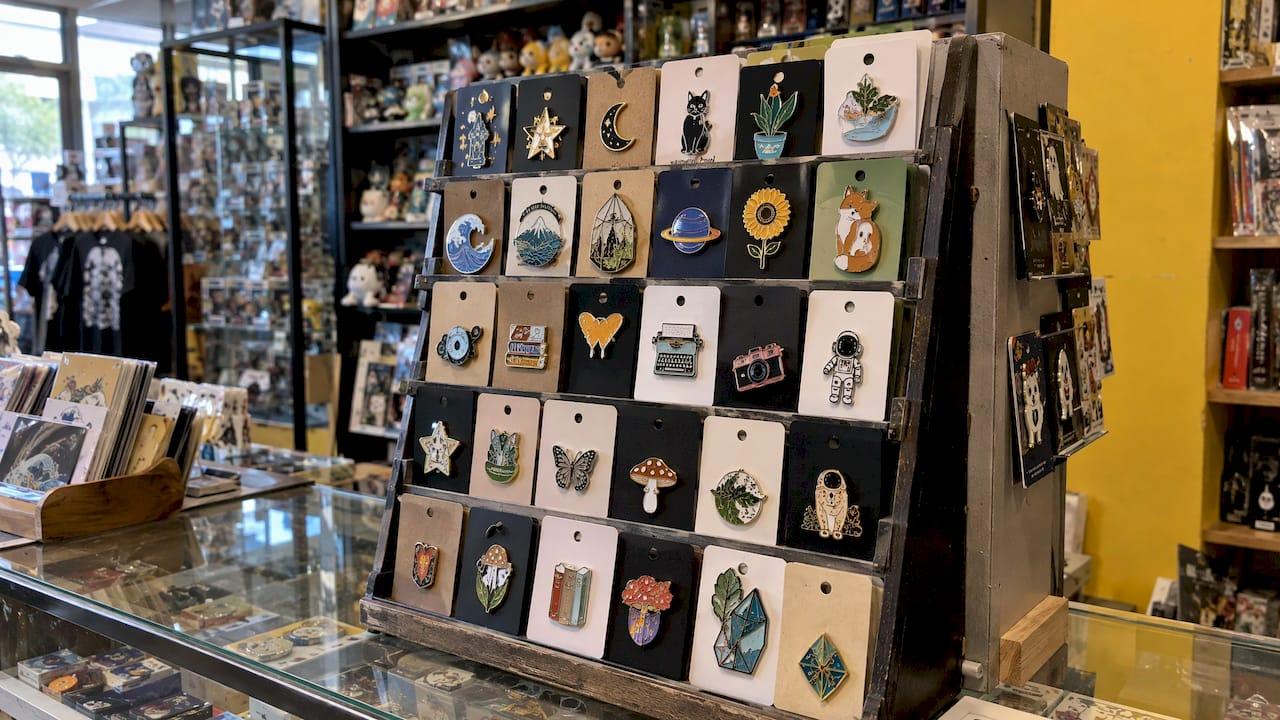
The best collectible pin stores are rarely called pin stores. Pins live on a wall by the register at comic shops, in the glass case at a collectibles store, on an artist's table at a convention and in a trader's lanyard at a mall meetup. The fastest way to find them is to search by place and fandom instead of by the word "pin," and to use listings that real local fans keep up to date. That is how we built Fanboys: community-submitted shops and events, searchable by city and by what you collect.
This guide shows where pins turn up, how to find the shops and events near you, what to confirm before you drive over, and how to tell a distinctive pin from a dull one.
TL;DR
- Enamel pins show up in comic shops, collectible stores, boutiques, gift shops, conventions and trading meetups, so search by city and fandom, not only "pin shop."
- Community-submitted listings keep small shops visible that chain-focused maps miss.
- Most pins in indie shops are modest purchases: a 2017 report quoted a gallery curator putting typical prices at $5 to $15.
- Check a shop's inventory, hours and event details with the shop before you go; pin events change often.
- For limited editions, look for a numbered backstamp, a stated edition size and clean enamel fill.
Table of Contents
- Where collectible pins actually live
- How to find pin shops near you
- Finding pin meetups and trading events
- What to check before you visit a shop
- How to spot a distinctive, authentic pin
- Beyond the shop: artists, wearing and displaying
- Our perspective
- Find pin shops and events on Fanboys
- FAQ
- Sources
Where collectible pins actually live
Pins are a small, cheap, high-variety product, so they spread across many kinds of retail. A LA Weekly report on the enamel pin boom said collectors could find them at chain retailers, small boutiques, pop-culture conventions and a gallery shop, Gallery Nucleus in Alhambra, California. The same piece described pins as wearable art and noted they had become big sellers for some independent artists.
In practice, that gives you five places to look.
Comic shops. Many keep a pin rack or a blind-box shelf next to the register, often with pins from local artists and publishers. If you already know a good comic shop, ask what pins they stock. Our guide to used comic book stores explains how to find the right shop near you, and those same shops are often your best pin lead.
Collectible and toy stores. Stores that sell figures, trading cards and vinyl often carry licensed pins from anime, games and film. Our city pages for collectible stores in Los Angeles, Denver, Phoenix, Philadelphia and Washington, DC are good starting points.
Anime shops. Character pins, acrylic charms and keychains sit side by side. If your taste runs that way, see our guide to anime stores with cosplay supplies.
Galleries, museum shops and boutiques. Artist-designed pins turn up in gift shops and art spaces, especially around openings and release nights.
Conventions and artist markets. This is where the most distinctive pins are. Many independent designers sell directly at tables, sometimes with a show-only design. Our guide to comic book shows near you shows how to pick one worth the ticket.

How to find pin shops near you
Here is a routine that works in a big city or a small town.
- Start with your city and your fandom. Open a local directory and search your city for collectible stores or comic shops, then filter by what you collect. On Fanboys, you can search by fandom and location, and shops and events are added by the community, so a small store that never shows up in national chain lists can still be there.
- Read the listing for clues. Descriptions, photos and the category tell you whether a store leans toward anime, comics, games or general collectibles. A store with a wall of licensed merchandise is a better bet for pins than a shop that only sells back issues.
- Search nearby neighborhoods. Pin sellers cluster near campuses, arts districts and mall food courts. Check the next town over before assuming your area has nothing.
- Look for events, not only stores. Many collectors find their best pins at one-day markets. A few miles of driving to a convention can beat a month of browsing a rack.
- Add what you know. If your favorite shop is missing, add it. Community listings are only as good as the people who contribute, and every addition helps the next collector nearby.
If you are in the Pacific Northwest or Southwest, our game stores in Portland and comic stores in Los Angeles pages cover shops where pin racks are common alongside other merchandise.
Finding pin meetups and trading events
Pin trading is its own scene, and it is the easiest way to meet collectors who know where the good shops are. A few places keep running event lists:
- The Disney Pin Forum events calendar lists in-person trading events with dates, locations and event details. Its listing included events in Illinois, Oregon, New York and California in November 2026.
- The PinPics events page features larger trading events and local recurring meetups, including the North Jersey Disney Pin Traders gathering at Paramus Park Mall.
- Parks & Prep Co.'s pin trading events calendar said in 2026 that it had captured more than 350 pin events across 33 states and Washington, D.C.
Those lists lean toward Disney trading, so they are strongest if that is your lane. For anime, comic and artist pins, the more useful meetups are usually organized through a local shop, a convention or a fan club. Our guide to anime clubs near you shows how to find groups that trade merchandise, and local comic stores often post flyers for collector nights.
Two habits save you wasted trips. Treat any event listing as a starting point, because dates, venues and vendor lineups change. And contact the host, as the Parks & Prep calendar itself advises, before you travel.
What to check before you visit a shop
A short checklist beats a long drive to a closed door.
- Hours. Small shops often keep irregular hours, especially around holidays and events. Look at the latest listing and the shop's own page.
- Pin stock. Message or call and ask whether they carry enamel pins, which fandoms, and whether they hold limited or new releases. A shop that sells mostly cards may have only a handful.
- Release days. Blind boxes and limited drops often arrive on specific days. Ask when new pins land so you are not picking over leftovers.
- Event details. If a signing, pin night or trading meetup is advertised, confirm the date, start time, whether there is an entry fee and whether you need to bring pins to trade.
- Payment and holds. Ask whether the shop accepts cards and whether it will hold a pin for a day if you are traveling from out of town.
On Fanboys, listings and events are submitted by the community, so if a shop's details have changed, you can help the next visitor by updating them.
How to spot a distinctive, authentic pin
Once you are in front of a rack, a few quick checks tell you a lot. These are practical collector habits rather than hard rules.

Look at the enamel. Clean pins have color that stays inside its metal lines, with a smooth, even surface. Gaps, bubbles, overflow and off colors suggest poor manufacturing.
Check the back. Look at the posts and the backstamp, the marking stamped on the reverse. Blurry or missing backstamps on pins that should have them are a warning sign.
Verify limited editions. If a pin claims to be limited, look for a numbered backstamp and an edition size the artist has stated. A claim with no number and no artist information is hard to trust.
Be suspicious of bargains. A pin that sells far below the going price for its design may be a counterfeit or a low-quality copy.
Know the price range. For indie pins, the 2017 LA Weekly piece quoted Gallery Nucleus curator Ben Zhu saying pins typically ranged from $5 to $15. Prices for licensed, exclusive or older pins can differ, so treat that as a baseline for small-batch artist work.
For pins bought online from a local seller, check the seller's reviews and sales history, particularly when a pin is rare or expensive. In person, conventions and craft fairs let you inspect pins from several vendors side by side, and event-exclusive designs are often only sold there.
Beyond the shop: artists, wearing and displaying
A lot of the most interesting pins come straight from artists, and buying from them directly is one of the best ways to build a collection with a story. If you want to back the people who make them, these ways to support independent artists are worth a look: buying, showing up at events and sharing their work.
Once you have a few pins, you will want to wear them. This guide on how to wear enamel pins covers placement and styling, so your finds stay secure and look good on a jacket or bag.
Our perspective
Pin collecting is local by nature. The pins you will remember are rarely the ones everyone can buy online: they are the ones a shop owner set aside for you, the ones an artist sold at a table across town, the one you traded for on a Saturday afternoon.
That is why we built Fanboys around people instead of a national database. Fans add the stores and events they know, and anyone can search by city and by what they love, whether that is anime, comics or games. A directory shaped by the community points you to the corner shop with the great pin wall, not just the biggest name on the map.
Our marketplace works the same way: local collectors and shops list merchandise near you, so the thing you are hunting for can be a short drive away.
Misty
Find pin shops and events on Fanboys
If you want one place to start, search your city on Fanboys. You can browse collectible stores by city, see comic shops, game stores and record stores nearby, and look through local listings and events added by other fans. Shops and sellers can list merchandise through our location-based marketplace, so collectors can find what they want close to home.

Start with the Fanboys homepage, or go straight to a city page such as collectible stores in Los Angeles, collectible stores in Orlando or collectible stores in Pittsburgh.
FAQ
Where can I buy enamel pins near me?
Try comic shops, collectible and anime stores, boutiques, gallery and museum gift shops, and conventions or artist markets. A city search on Fanboys, filtered by fandom, shows local stores that carry the kind of merchandise you collect. Call ahead to confirm they stock pins.
Are there stores that only sell pins?
Dedicated pin shops exist, but they are uncommon outside big cities. Most pins are sold by shops that cover several categories, which is why searching by fandom and location tends to work better than searching for pin stores alone.
How much do collectible pins cost?
An LA Weekly report from 2017 quoted a gallery curator saying that pins typically ranged from $5 to $15. Licensed exclusives, limited runs and older pins can cost more, and prices vary by shop and seller.
How do I find pin trading meetups?
Event calendars such as the Disney Pin Forum events page list in-person trading events, and local comic shops and fan clubs often host smaller meetups. Confirm the date and location with the host before you go, since event details change.
How can I tell if a limited-edition pin is real?
Look for a numbered backstamp and an edition size stated by the artist, clean enamel fill and crisp backing details. Blurry markings, rough edges and prices far below normal are warning signs.
Sources
- Why Is Everyone So Into Enamel Pins Right Now? (LA Weekly)
- Events | Disney Pin Forum
- Events | PinPics
- Pin Trading Events Calendar | Parks & Prep Co.
- How to Support Independent Artists
- How to Wear Enamel Pins: Placement, Styling and Staying Power